
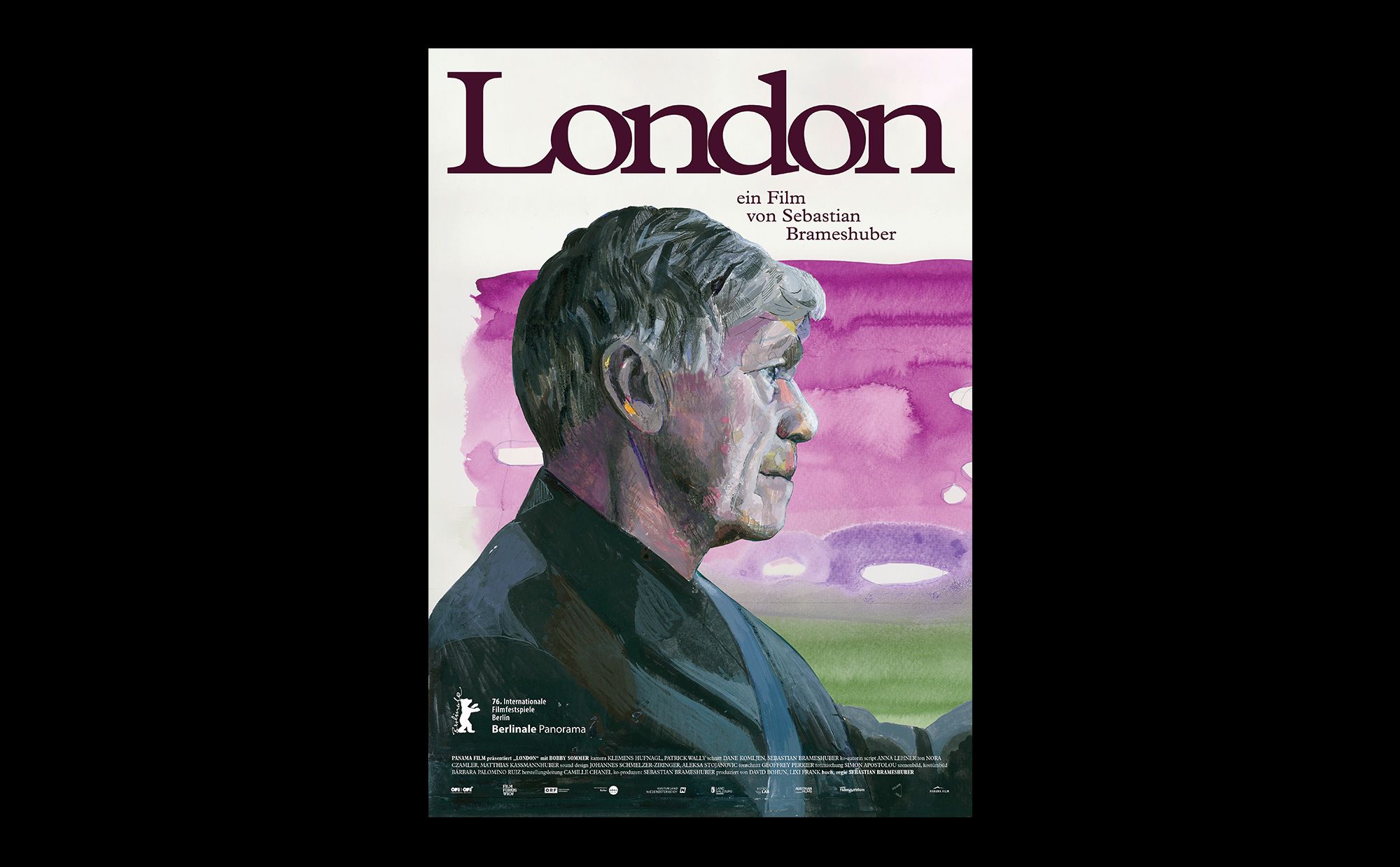
Poster art by Andrea Ventura

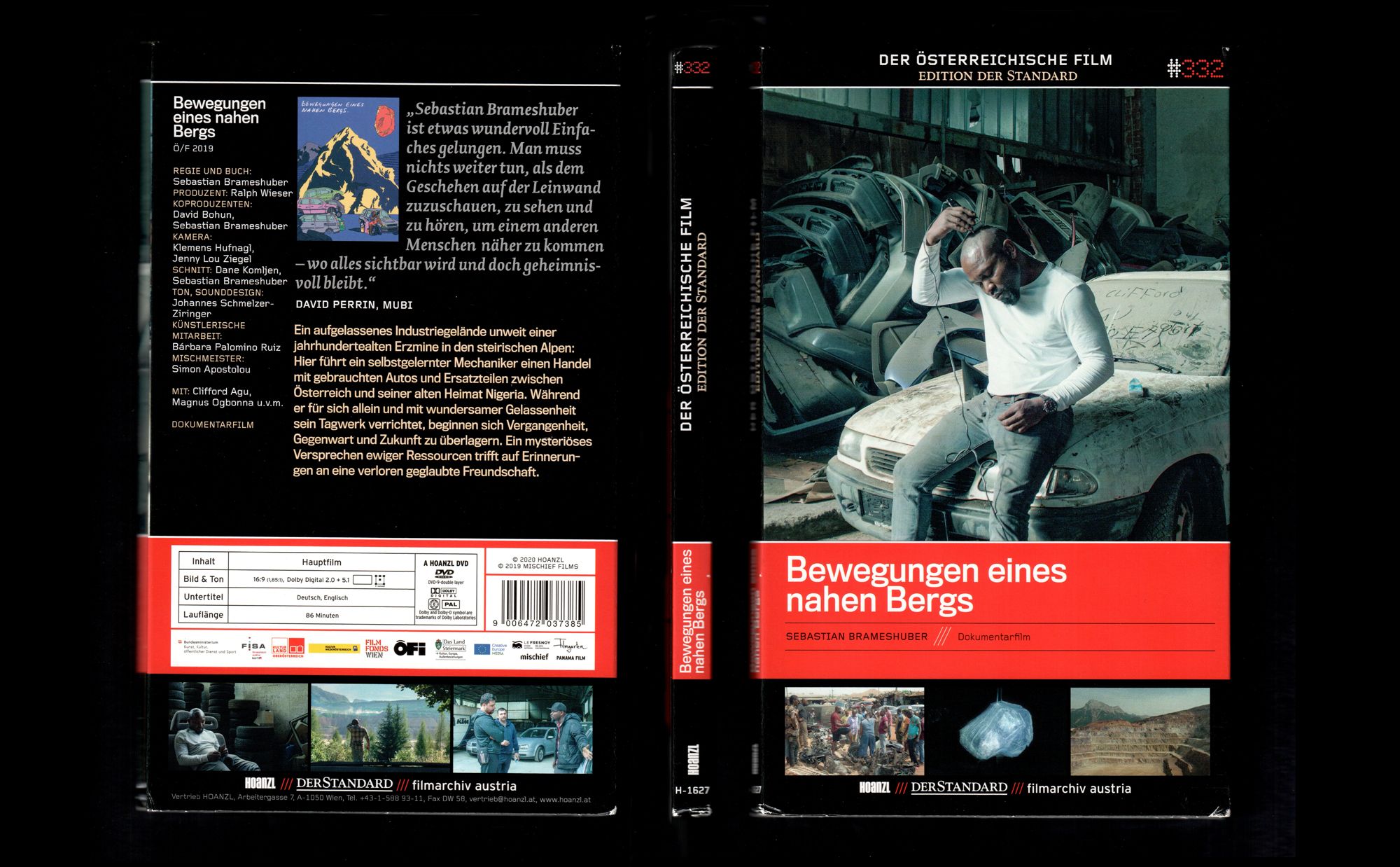
DVD, 2020, Edition Der Österreichische Film / Der Standard, No. 332, Austria

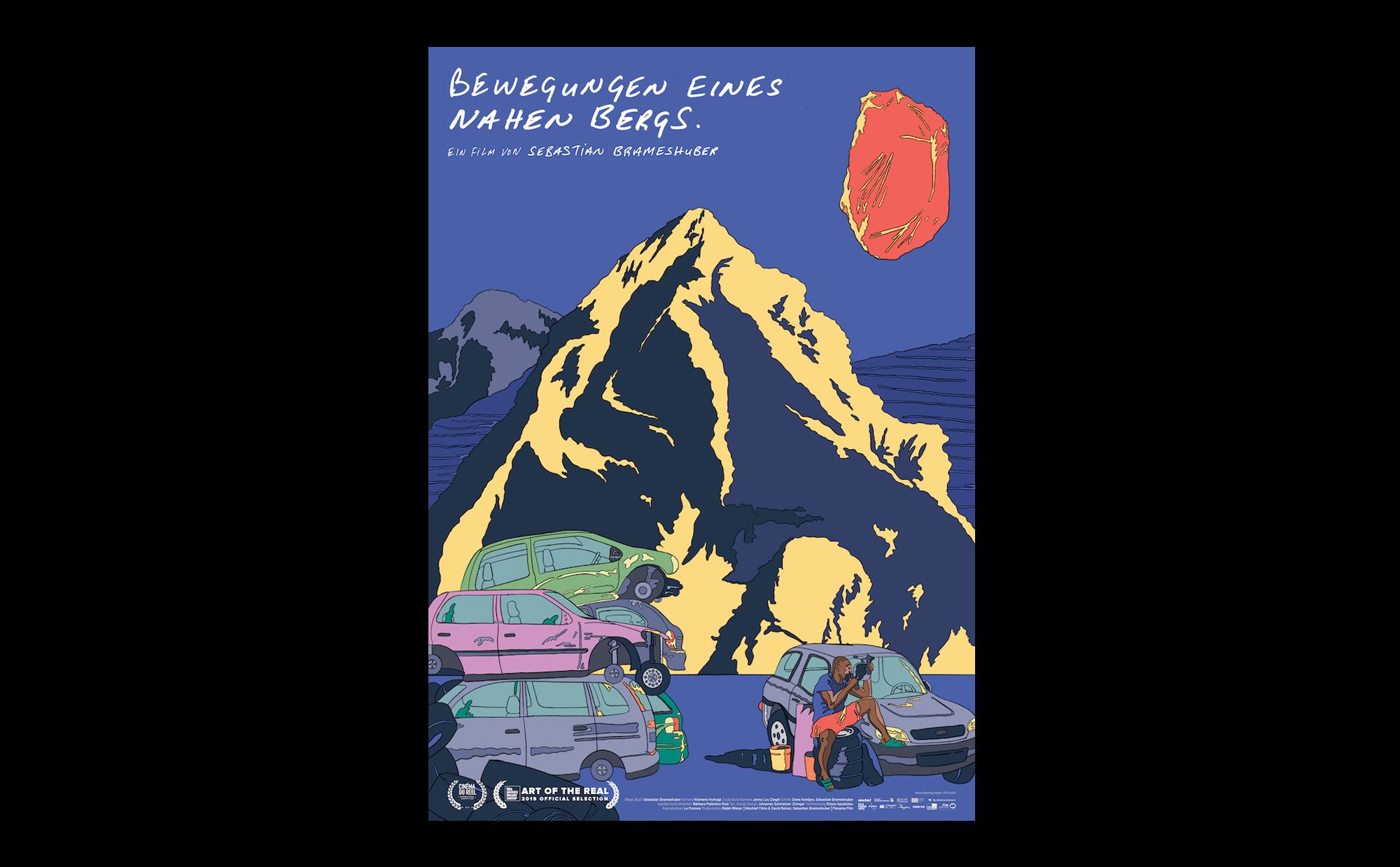
Poster art by Miro Denck

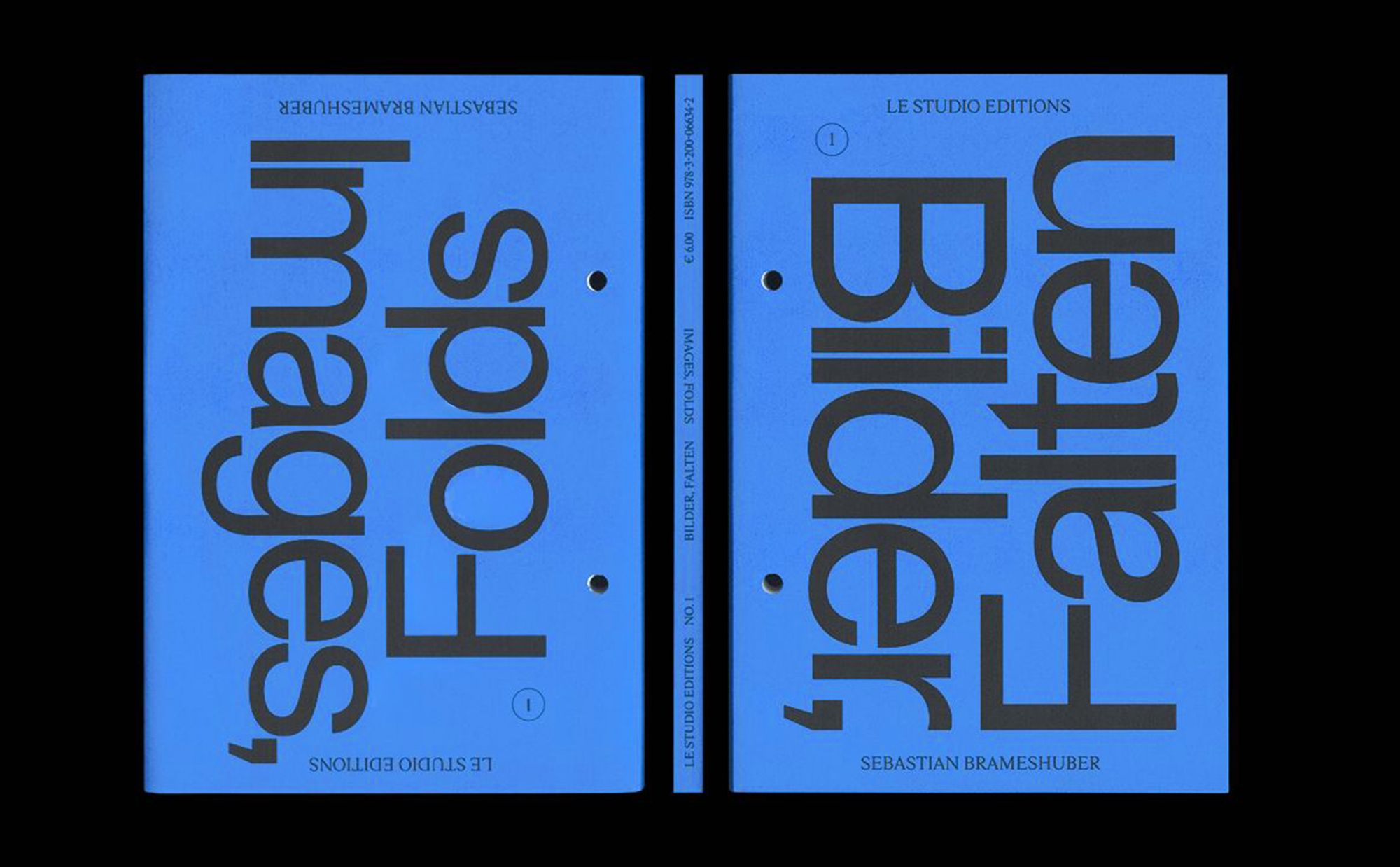
On the occasion of the two retrospectives dedicated to Sebastian Brameshuber at the Austrian Film Archive Vienna and the Anthology Film Archives in New York, Le Studio published “Images, Folds”, a small, very beautiful, informative and also bilingual book about Brameshuber’s body of film work. It was carefully edited by Alejandro Bachmann and comprises a lengthy conversation between Bachmann and the filmmaker as well as texts by the editor himself, Esther Buss, Stefan Grissemann, Eve Heller, Michelle Koch, André Siegers and Claudia Slanar.
Published by Le Studio Editions, Vienna, October 2019. Edited by Alejandro Bachmann. ISBN: 978-3-200-06634-2.
Images, Folds: First Traces. A publication about a filmmaker who is 38 years old and has presented seven films to date requires caution. It is important not to isolate and hermetically seal Sebastian Brameshuber’s oeuvre in interpretations, yet to interpret what holds it together—making the first folds visible as traces, knowing that everything will continue to be folded together and unfolded to an even greater extent in the future. This publication aims to spark this anticipation of things to come, while conveying his already extant body of work as a small corpus of creation—in order for us to follow the traces in the work of Sebastian Brameshuber over the next few years, or see them sanded up like dunes, and subsequently recognize completely new fold mountains.
At the center of this endeavor is, then, the long conversation, the result of thoughts we exchanged via e-mail throughout September 2019. With every line written and read, the proposition I outlined above was confirmed. They exist, these folds that create a close relationship between the filmmaker’s longer documentaries and his short, mostly experimental works; there is a kind of handwriting that can be made out throughout what are, in part, very differ- ent pieces.
At the same time, it was the description in André Siegers’ contribution to this publication, in which he compares the images to butterflies folding and un- folding their wings, that once again suggested the fold as a sufficiently precise and simultaneously invitingly open picture for all works. In Sebastian Brameshuber’s creations it is always about existing images that preserve irregularities and creases (that is, folds) and thus become visible in a new light in his films: from muezzins in Turkey and young people in Ebensee to a man of Nigerian origin in Austria in the feature-length films; from highly esteemed art institutions and our idea of the analog image to the digital future in his short films. Each of the seven essays in this publication follow these folds in their own individual way.
What strikes me on the first glance at your filmography is that it is exclusively categorized into feature documentaries—Muezzin (2009), And There We Are, in the Middle (2014), Movements of a Nearby Mountain (2019)—and short works one might call experimental or avant-gardist—Preserving Cultural Traditions in a Period of Instability (2004, with Thomas Draschan), Keynote (2006, with Thomas Draschan), and In, Over & Out (2015). I can’t think of many filmmakers off the top of my head whose work can be divided so distinctly into these two genres. But I would say that these tendencies band together a little bit in your most recent documentary work: On the one hand, Movements of a Nearby Mountain is a classic documentary. But in its poetic elements, its use of different materials and its rather liberal way of dealing with reality, there is also something free coursing through its veins, something searching, something that crosses lines.
When a VHS copy of Metropolen des Leichtsinns (2000) by Thomas Draschan and Ulrich Wiesner fell into my hands around the time I was finishing high school in my hometown of Gmunden, I couldn’t get it out of my head for a long time. I was immediately fascinated by the abstraction of so-called avant-garde films, by their exploration of the most fundamental cinematic building blocks, their power of association in contrast to the function and effect of narrative cinema. Something condensed in these “experimental” films in a way I never saw in “normal” movies or on TV—with the exception, perhaps, of the legendary Humanic ads, which aired well into the 1990s, like Edgar Honetschläger’s HCN Miau (1996). When several years later I heard Peter Kubelka formulate the thought during an event at the Austrian Film Museum that the sun rises and sets twelve times per second in his film Arnulf Rainer (1960), I was completely inspired. I only knew this feeling from music and poetry, although in my younger years I never or only rarely got into poetry in the classical sense, but I listened to a lot of rap instead. To find unexpected, associative, often abstract metaphors: that’s an essential part of rap culture, as is the use of language as material. And on top of it, I felt that I could make this kind of film too; I needed neither a big budget nor a huge crew. I also liked the scene’s “underground attitude,” repudiating the market and declaring insufficiencies a strength. I think that many of the most exciting artistic works were created out of this attitude. In any case, this is how my first film, Preserving Cultural Traditions in a Period of Instability, was created, which I made together with Thomas Draschan under the name Fordbrothers and which I consider one of my, of our, best and lasting efforts, despite its short running time of three minutes. Thomas, who is one generation older than me and whose films were already celebrated at international festivals at the time, was a very generous mentor and ally. The defective digital found footage from which we created Preserving Cultural Traditions in a Period of Instability exposes the inner life of the kind of digital moving image that, due to its small data volume, today is omnipresent in the World Wide Web and beyond. The motion vectors of the compression algorithm, which doesn’t access individual images but entire sequences of images and tries to compress them in a way that saves storage space, go haywire and develop a kind of magical poetry and beauty that is hard to ignore. The film documents, if you will, the creation myth as well as the fragility of digital moving images, which is where they distinguish themselves from their analog counterparts. The negative stance Stan Brakhage takes in the voiceover in terms of working with computers and the internet is both illustrated and refuted by the images in their collapse, because the algorithm’s failure unexpectedly creates something totally new and no less valuable. When we look at it this way, our film is also an homage to volatility, to the impermanence of the moment, to loss of control as an (artistic) opportunity. I like this film because of the humorous inconsistencies the interplay of images and Brakhage’s voiceover creates. I believe that working with unpredictability and trying (in vain) to get it under control, along with the (futile) struggle against the fleeting moment, are the basic themes of my documentary work.
Could you expand on this notion a little bit with regard to your documentaries? One could also read your documentary work as follows: Muezzin is a movie about a traditional practice and its transfer into a contemporary logic of competition, And There We Are, in the Middle is a movie about the traces of a former concentration camp in the present day, specifically in the lives of young people in Ebensee, and Movements of a Nearby Mountain is a movie about the persistence of a myth and the never-ending cycle of scrap metal, of the auto industry, of global trade. Seen from this perspective, your work could also be interpreted as an exploration of what persists, what survives, what perseveres. How, in your opinion, does the element of volatility factor into all this?
My impression is that there cannot be one without the other. If I’m interested in what persists, fleeting things are all around me. Documentary work originates from this ambivalence—the desire to film a fleeting moment in order to (ostensibly) transform it into something permanent. The Islamic call to prayer is a fleeting thing, because faith commands that it always and exclusively be performed live (exceptions, as it were, prove the rule). At the same time, in theory, this call to prayer never ends, because the starting times are clearly defined each day anew, at dawn, which is why the muezzin in Istanbul starts his call a little earlier than the one in Sofia, than the one in Sarajevo, than the one in Vienna—and whenever the muezzin in Baku calls to morning prayer, it’s almost time for the one in Istanbul to rise and shine again. This seems to me like a community’s self-assurance that the world be kept spinning and not thrown out of joint. Metaphorically speaking, the call to prayer is an elastic band holding together the seconds, minutes, hours, days, and, beyond time, space. I think rituals—which is to say, acts repeated regularly with more or less sacred gravitas (even something as banal as using the espresso maker every morning)—are strategies humans concoct to come to terms with volatility and finitude and, ultimately, to get a sense of self-assurance. And There We Are, in the Middle also revolves around the impermanence of memory in light of an ever-growing temporal distance to the starting point of said memory, which is to say the actual event. People try to gain the upper hand against forgetting by way of a culture of remembrance, which also follows ritual patterns—such as annual commemoration ceremonies in former concentration camps. This claim is contrasted with the local teenagers’ lack of historical understanding. In this they are not so different from any other teenagers around the world. Not for nothing does the youthful celebration of life in the here and now go hand in hand with an arsenal of eruptive emotions. What seems to me the only specific thing about the constellation in Ebensee is the context in which that energy has discharged. Movements of a Nearby Mountain employs an epic narrative, the tale of the water sprite, to beguile us from the certainty of transience. While the tale aims to convince us that eternity does indeed exist, the Waterman’s mischievous laughter upon his release from captivity makes it pretty clear that his promise was, at best, a white lie. My movie’s protagonist, Cliff, praises eternity in a religious land, knowing full well that his business will one day come to a standstill, much like the business of the ones who built the hall he now rents. Making movies—especially those with documentary aspirations—is a strategy to make sure, twenty-five times per second, that the world around you and you yourself exist.
In your films you stage certain processes and procedures with great affection that are specifically carried out by individuals: The muezzin walks briskly to the mosque at night, prepares, climbs the minaret, concentrates, starts to sing—and then the film cuts to a wide shot of the Istanbul cityscape. The singing contracts time and space, as you say, and coincidentally the film does the same. Muezzins in Istanbul, teenagers in Ebensee living in a place entangled in its own past, Cliff, whose work moves Austria closer to Nigeria. How would you position these people in relation to yourself, a man from Upper Austria living in Vienna, who studied in Vienna and France? Or, to rephrase the question, is it easier to recognize these connections between individuals and society, history, and myths outside of one’s own context—crudely put, “in the Other”?
Working in documentary, to me, means exploring “the Other” in one way or another. If I were to make a cinematic self-portrait, this process would include distancing myself from myself so that I could ultimately look at myself as an “Other.” You distance yourself into a “safe range” step by step, a range at which an analytical perspective becomes possible: at first by putting your idea to paper, then in the process of filming, again in the cutting room, and finally of course by watching the film in the theater. The audience also inevitably looks at the “Other” first; this is already dictated by the apparatus that is cinema. Ideally, at some point, the moment sets in when you recognize yourself, aspects of your own life, your own existence, in it. After all, the dialectic between the Self and the Other is where our entire (social) life takes place. Creating a distance as well as creating a closeness are central strategies of documentary filmmaking. I would say that in Muezzin I was more interested in creating some sense of closeness, while in And There We Are, in the Middle and in Movements of a Nearby Mountain there’s already a much more intense dynamic between these two strategies—and a more conscious effort to deal with them.
At some point I noticed that apparently—in a rather ambivalent way—I’m interested in brotherhoods of men and male characters. This interest reflects certain questions, or even insecurities, I have in terms of my own existence as a man and my relationship with the men in my family, of course also with my father. Men, to me, are at once the same and Other, they are distant no matter how close they may be to me, and close no matter how distant they may be. It leads to a certain angle, a certain charge in my films. The more I become aware of this, the better I get at dealing with it. In many ways, Muezzin was about bringing people, things, or issues back down to earth in order to break open the aura that already existed around them—the religious nimbus—and to present a foil by placing the focus on the secular instead of the religious aspects, thereby taking away quite a bit of the profession’s mystique. By seeking out the mundane in the exceptional, the Other will seem less different. To see that the profession of muezzin doesn’t exclusively consist in holy solemnity but also contains many of the banal aspects that make up human existence, undercuts romantic, exotic expectations. I like that.
As unique and complex as each individual appearing in my films may be, my relationships and commonalities with these people are equally unique and complex. These relationships are undergirded by an evolution and a transformation, because a film project takes months, sometimes even years, of more or less intense exchange with this or that person. I was surprised to find that Andi, Ramona, Michi, and David, the teenagers from And There We Are, in the Middle, were no less foreign (or similar) to me than the Turkish muezzins, although I come from the Austrian Salzkammergut region, grew up there, speak the same language, and am in fact quite close to them in terms of culture, language, and geography. In this case, it was on the one hand the age difference that constituted the “Others” and on the other hand my concept of my own heritage, which wasn’t without friction and was marked rather by my distancing myself from it than by an attempt to (re-)approximate it.
These encounters between you and others in your documentaries can be quite diverse, for instance comparing those in Muezzin to those in And There We Are, in the Middle: On the one hand, there is an increasingly clear tendency to poeticize, to use visual metaphors where the concrete, material reality also stands for an idea, a thought, a social condition. The wide shot of the mine shaft in And There We Are, in the Middle would be such an example, the shrink-wrapped engine blocks in Movements of a Nearby Mountain another. In the latter, there is a whole new level—that of the Waterman, the mythological level, those shots of the second man in the autoshop that are hard to interpret—a level that no longer unequivocally references the real world. At the same time one notices that you refrain from talking directly to your protagonists in Movements of a Nearby Mountain—they are no longer given a chance to speak, they no longer anchor their world in their language, use their terminology. Rather, they articulate themselves through their physical presence, through being in the frame, while you are completely absent as an acoustic voice but become much more perceptible in the poetization.
This distinction is largely concomitant with my evolution as a filmmaker and the experiences I made during the production of each individual film—and also the mistakes that led to different approaches and work methods.
When I began working on Muezzin in 2006, I—like the rest of my team—was fairly inexperienced. In my mid-twenties I considered it an enormous pressure to owe it to my supporters to deliver, in a manner of speaking—to have to make a “real” documentary that fulfills certain technical and narrative standards. Even though I had envisioned a different film—much more reduced, slower, more associative, more cinematic—only an inkling of this vision made it into the final cut, because I got caught up in the gears of “professional” filmmaking. Suddenly there was all this talk of “the viewers,” who wouldn’t understand this or that detail. At the time I lacked the experience or the audacity to do it my way and not the way the imagined “average viewer” might want it done. It is no accident that this was the only film of mine we managed to sell to television. Also in terms of the number of invitations to film festivals, Muezzin remains my most successful film, although And There We Are, in the Middle and above all Movements of a Nearby Mountain are better, more mature, more complex films.
I started my work on And There We Are, in the Middle with a sense of dissatisfaction with my first film, Muezzin. Klemens Hufnagl, who was much more experienced in shooting documentaries than I was, tried to counterbalance my insecurities when we started photography by always neatly breaking down the scenes we shot. After the first day of shooting, I looked at the footage together with my cutter, Emily Artmann, and was quite unhappy with it. The camerawork wasn’t bad, but all the scenes that would have been really interesting were hopelessly detailed, the camera was here for a few moments, there for another few, so that nothing was given time to evolve. And that was the first time I realized—also thanks to Emily’s encouragement to that effect—that I had to present myself as the “director” for the remainder of the shoot and make certain announcements that had to be observed. I still remember well the way Klemens looked at me when I told him that I didn’t want any more reverse shots and wanted mainly a static camera from now on. Of course that was a risky endeavor, because it reduced the options in the editing, but this reduction also comes with a focus on what’s essential. After all, what’s essential is to convey a sense of time and its passing, is to trust that even the somewhat mundane moments contain a poetry and a truth that go beyond the actual moment itself to point to something bigger that can only unfold without cutaways, with the passage of time. So I started to work the way I thought was right but had never dared to try for lack of experience and confidence as a filmmaker. I wasn’t alone, anyway; I’ve always worked with a very good team, with consummate professionals who, unlike me, learned their trade in film school.
I already thought it quite arrogant of me to issue my “ban” on reverse shots. But fairly quickly it turned out to work. The principle had been established, and we were able to continue less dogmatically. What it proved to me was that a film—or at least the films I wanted to make—took place much more in the in-between than in what’s directly shown or said. So I shot images like the mine shaft you mentioned earlier, which points to the town’s Nazi past on the one hand and on the other, in the way I inserted it in the editing later, points far beyond that to something uncanny, inconvenient, a dark hole at the outskirts of a place that is both attractive and repulsive and scary, because it touches on all spheres of life in this town with pervasive insistence. Though I consider And There We Are, in the Middle a success, I wasn’t entirely happy with it. I wanted an even looser approach, to distance myself even further from the notion of having a central theme in a film. The way people treat documentaries—from funding to screening—is generally much too dependent on the topic, at the expense of the materiality of cinema and the qualities that constitute a cinematic experience in the first place.
While I was still editing And There We Are, in the Middle I therefore decided to go on hiatus and spend two years in France, at Le Fresnoy, the National Studio for Contemporary Arts. I found this liberating in many respects. There I understood how much my self-image as a filmmaker had been shaped by the dos and don’ts and the claims made over time by the forebears of Austrian cinema. In France, they have a much more relaxed, complaisant attitude toward poetry and even pathos. Conversely, they have a harder time with matter-of-factness in artistic expression. Very simply put, art should look like art and not just depict reality. In any case, the French scene and the history of cinema as a whole are much too large and multifaceted for any single person to attain an interpretive monopoly. Out of this experience, I made Movements of a Nearby Mountain. As to your question or observation about my vocal absence in Movements of a Nearby Mountain in contrast to And There We Are, in the Middle: Such an absence seems to open up a documentary film much more for the in-between, it makes its readability more fragile, more brittle, and omits these clear thematic statements that were quite instrumental in And There We Are, in the Middle. When we started photography, I decided to explain very clearly what I wanted from the teenagers and also from their parents. It seemed to me the right thing to do ethically, because I expected there to be some tricky situations. I don’t know if I’d do it the same way all over again—in some instances my presence bugs me and I think, “Just leave them alone!” But there are also scenes I still find powerful, like the first conversation with Andi and his parents, where so much is said about him in so little time. Or the conversation with Michi and David toward the end at the train station at night, when David tells me for the first time that he used to be a neo-Nazi.
It’s probably something only I notice, but the last of the five kitchen table scenes in And There We Are, in the Middle is the only one in which my voice doesn’t appear. The protagonists of Movements of a Nearby Mountain, then, don’t speak less, they do get a chance to talk, but what’s missing—as you correctly point out—is a certain grounding that is part of the question-and-answer format, because an answer to a question is a statement, something you should more or less stand by, not just for the moment. This entails a certain seriousness, a gravity—perhaps even heaviness—which I nonetheless find quite appropriate at times.
Let’s talk about the rules of a “good” documentary. Considering the “average viewer” and disengaging from these thinking patterns: might this be where the shorter works come into play, those that might fall into the experimental category—the avant-garde, the experimental film, video works—a genre, so to speak, that cries for constant transgression and rule-breaking and in which the deconstructive aspect is in a certain sense already inscribed? Or is there, especially in Austria, a school, perhaps more than one—structural film in all its facets, this interest in materiality, apparatus and so forth—to which one has to position oneself from the start?
The dissolving images in Preserving Cultural Traditions in a Period of Instability, the formats and materialities in In, Over & Out—all that seems like an intense exploration of the medium itself. Are your documentaries a form of attention to the world and your experimental work a look at the medium’s inner workings?
As I described at the outset of our conversation, it was my encounter with an avant-garde film, and consequently with the genre, that awakened my deeper interest in film and the moving image. The three works that stand in the tradition of structural film—Preserving Cultural Traditions in a Period of Instability, Keynote, and In, Over & Out—the first two of which I made with Thomas Draschan under the moniker “Fordbrothers,” are very playful and anything but rigid, but still no less serious, I think. While the title Preserving Cultural Traditions in a Period of Instability was meant ironically, there is a seriousness to the film, an ambiguity, as is often the case with humorous works. In Keynote we reworked a keynote speech from Apple Inc. we streamed online into a sort of structural slapstick film. In this case we were also deeply interested in working with language, because we rearranged the found sound material into a new composition. Back then, Silicon Valley proclaimed the coming of a Digital Wonderland, but when that proclamation reached the other end of the line at Grüngasse in Vienna’s fifth district, all that was left of it were ruins and twitching, contorted, melted human beings, a collapsing world of pixels populated by zombielike figures. Like a broken promise or an evil, morbid premonition that this Promised Land also had its dark sides—with Steve Jobs as the sorcerer’s apprentice who conjured the spirits, probably during one of his LSD trips, which he is said to have classified as one of the three most important experiences of his life. Hearing myself describe Keynote like this, I now realize that this big promise that was doomed to fail from the get-go reappears in Movements of a Nearby Mountain. In, Over & Out is also not overly rigid—in the sense that it’s actually a digital video that can only exist in this very form.
Strictly speaking, there is no possibility to reconcile all these different formats, unless they are digitized and what’s actually digital is sold under the guise of being analog. I see a remarkable analogy between the technological developments from the analog to the digital image and the social developments toward today’s living and working realities. The Lumières put their workers on celluloid. In this moving-image process the single frame constitutes the smallest unit; to turn it into even smaller units, you would have to physically destroy it. (Peter Tscherkassky did this, metaphorically, in his Motion Picture [Workers Leaving the Lumière Factory] from 1984.) The Lumières’ workers are rendered as a collective in these images, a collective whose integrity, in my opinion, is a basic prerequisite for solidarity. The same year the Lumières made Workers Leaving the Lumière Factory (1895) saw the founding of the first French federation of trade unions. In contrast, the smallest unit of the digital moving image is not the single frame but the single pixel, which is why each individual frame can be split into a vast number of small particles, and therefore each frame, each image, is missing its integrity or is only loaned integrity by an algorithm. The workers of the digital precariat no longer enter and exit the factory together at the beginning or end of their shift but individually, autonomously, so to speak. Much like the analog film frame as the predominant image recording technology was replaced by a multitude of pixels, the organization of society has also become more fragmented and the social “strata” have come to show signs of dissolution. The basic requirement for solidarity has fallen by the wayside; from now on it’s every man or woman for him- or herself, dog-eat-dog. Self-determination and self-fulfillment have long lost their tone of a benevolent invitation and are now full-fledged neoliberal imperatives.
What my documentaries and experimental works share in common is above all a certain economy in the work: the claim to make films with comparatively limited means and a small team and, in exchange, with maximum control during the production process—a claim I think I have learned to implement more and more with each film.
So, no turning toward the medium’s inner working in the experimental genre and no focus on the exterior world in the documentary works: Because while In, Over & Out does use some of the tropes of structural film, it deals with actual working conditions—in this case specifically those of an internationally renowned art school. You’ve already talked about the freedom your visiting this school has given you, but at the same time there was a structure to it that—if I understand you correctly—required some criticism, which you again put into the film.
If by turning to the inner workings you mean an exploration of the functions or the materiality of the media themselves, then yes, you are right, it’s there. But it’s also there in the documentaries, at least in And There We Are, in the Middle and in Movements of a Nearby Mountain, though with different intentions, not with regard to individual frames or pixels but in terms of possible narrative forms or forms of associative storytelling. There isn’t this dichotomy of interior and exterior view/gaze in my movies, at least not in their pure form but perhaps as partly larger, partly smaller intersectional sets. Such a clear dichotomy is not what I am aiming for. In, Over & Out is a structural film because of the serial twelve-camera setup and the constant repetitions and variations of the same process; you could also read it as only that. The textures and materials of the various formats and the rattling of the heterogeneous moving images—all that seems as if the whole thing could come apart at any moment, there’s a very sensuous dimension to it, underscored by the driving rhythm of the soundtrack. In the movie theater, this is a very physical experience. You could also approach this film with the concept of bullet time, an effect we all know in its extremely slick form from Hollywood movies, as perfect and real as possible at the service of a cinema of illusion. We tinkered with all kinds of available cameras to create it in In, Over & Out, which accordingly resulted in a bumpy film. I take great joy in imperfection. But when I think of Metro-Goldwyn-Mayer (1975) by Jack Goldstein or Owen Land’s Film in Which There Appear Edge Letter-
ing, Sprocket Holes, Dirt Particles, Etc. (1966), these two films—and many more—already said everything there is to say about the subject of Hollywood versus Independent Cinema and about the materiality of cinema. We might also say that one of the end points of (analog) film history was reached with Kubelka’s Arnulf Rainer. You’d be hard pressed to make a more reduced, pointed film. At the same time, I think that the time of categorical explanations of the world as they inhere in the rigidly made structural films is over. In this categorical form you can no longer reassure yourself of the functioning of the world—the present has become too complex and digital images too fragile and ghostlike, which is to say, immaterial. I think that my films have wild fringes in terms of both form and content, because I’ve become too cautious to tackle the categorical. I couldn’t possibly deliver. Attempting it nonetheless would seem quite petulant to me—which is what’s happening with Trump, who has symptomatically taken to the world stage now, of all times, to claim that he is able to lift the world back into its old joint. Eisenstein once compared walking through and experiencing the Acropolis to editing a movie: You are guided along an architectural drama-
turgy through antechambers, across steps, through hallways, past pillars, into the interior, the cella. One element, one image, after the other. But as you can see in Preserving Cultural Traditions in a Period of Instability, for instance, it is now possible to walk through walls. The faulty algorithm breaks up the pixel wall and lets us glance directly into the innermost interior: The cables and ventilation ducts, pipes and wiring are exposed. We also made a 35-mm copy of Preserving Cultural Traditions in a Period of Instability. This made everything right with the world again, the genie was back in the bottle.
The jittery, feverish quality of In, Over & Out, this dissection of the act of entering and exiting a building, goes beyond the exclusive investigation of the medium on multiple levels. There is a short text at the end that gives the shooting location, delineates the historical cornerstones of the building, whose new building or superstructure was designed by Bernard Tschumi, by the way, who aspired to create an absolute architectural heterogeneity with this project—and making heterogeneity absolute, in my view, is one of those, well, let’s say, somewhat-too-grand gestures. Tschumi on several occasions pointed out that the building was inspired by prison architecture in order to boost the concentration of the artists working in it. You could feel that in there. What became very clear to me during those two years was how difficult it is to form communities of mutual solidarity in times of cognitive capitalism and immaterial work, precisely because people no longer work together under one roof. Tschumi put a huge roof over the building’s whole heterogeneity, with its old fabric, new structures, and various construction materials, thus summarizing the building. This works pretty well in architecture but can’t be transferred to the living realities of the people working in it. It would require a virtual, mobile roof, of which everyone had a part in his or her pocket to use whenever he or she worked on a project anywhere in this world or at home.
It’s easy to get into hot water here—with all-too simple categories. But whereas I can certainly see the absolute, the tendency to “explain the world categorically,” as you called it, in a filmmaker like Kubelka, I don’t see it as much in a filmmaker like Marie Menken, who some might associate with structural film—at least in some aspects. Which brings me back to a statement you made earlier: that you seem to be interested primarily in male communities and male characters: Steve Jobs, Stan Brakhage, Peter Kubelka, the muezzins, Cliff. This is more prone to catching people’s eye now, because it is addressed more often now—thankfully. Do these things go together, your frustration with inflexible, authoritarian patriarchal structures that are articulated in the way people think and consequently in the way institutions are set up and your engagement with art, which can potentially imagine poetic, liberated, flowing, iridescent kinds of thought and action and also leaves more room for such fancies?
We should probably make a distinction between structural and metric films at this point. But what I am primarily interested in is the gesture that becomes visible: Marie Menken takes the camera and goes out in search of the film while she is making it; Peter Kubelka always seemed to have already known what he wanted before he started making a film in the first place. It’s interesting that I spoke of Marie Menken’s films in the present tense and Peter Kubelka’s in the past tense. Kubelka’s films have done away with most of the traces that might point to a creation process; Menken not only leaves those traces in the film, she outright celebrates them: this search for a possible film, this at times more, at times less careful fumbling through the world with the camera and, with that, this sense of allowing herself to get involved with the world constitute an integral part of her films.
It gives off a more revealing, generous air and might—possibly—have to do with a premonition or a feeling, for example in 1964, when Menken released Go! Go! Go!, in which she refused to depict the rhythm and organization of society affirmatively and instead wanted to arrange the images according to a different, new pattern. But this is also true for Jonas Mekas. So I think it’s not just a question of gender but one of different sensibilities. I’m under the impression that the American avant-garde was generally a bit more casual and relaxed. But this doesn’t change the fact that I am fascinated by the resoluteness of Kubelka’s gestures, by the ascetic radicalism, this strife for a quintessence, for a sort of cinematic purity. At the same time—and from today’s perspective—I also distrust all of that.
Of course, Kubelka didn’t portray the world at large affirmatively in many respects; he, or rather his films, stood in visionary and radical opposition to the prevailing ideas of the time. Menken also didn’t question the world at large, and in both cases it is less the deliberate artistic decisions that are up for discussion but how things are approached and done, because as a human being—man or woman—you live in a society and cannot completely dissociate yourself from the way things are done in it, even if you try and are successful in some areas. I recently heard a woman on the radio make a half-ironic, half-serious statement that articulates this ambivalence quite well: “When we overthrow patriarchy, I’ll wear my skintight jumpsuit.” I would say that both Menken and Kubelka were accomplices in their effort to make another world visible and thinkable in their films, but they didn’t set the same house on fire. I assume they knew and respected each other. At any rate, Menken’s films are included in Kubelka’s Cyclical Program “What Is Film.” But what belongs in the Cyclical Program, what film is—that’s what Peter Kubelka tried to define. This is no coincidence, and there’s still a method to this in our society, although I think that a significant part of the younger generation has already internalized a form of skepticism with regard to patriarchal structures. What I’ve said so far actually already answers the question of how I would assess this in relation to my own work. It hasn’t been my aim to do so, but I’ve already developed a considerable distrust of flaunted masculinity, of global designs and know-it-alls, and also a distrust of myself and the Other within myself, who is of course equipped with a certain distance and aura and therefore holds quite a bit of fascination for me as well, all existing distrust notwithstanding.
All this sounds very serious, and maybe that’s the way it should be. But what I also like about your films is this lighthearted enthusiasm with which technology is contemplated and also used, with which society is analyzed and also performed, with which cinema investigates the world but also lets it breathe. The first sequence of Muezzin that I mentioned earlier would be one such example, the long tracking shots in Of Stains, Scrap & Tires or Movements of a Nearby Mountain, the rhythmic timing of In, Over & Out, the tongue-in-cheek contrast between what is said and what is shown in Keynote—this is what makes movies fun, it gives you joy, moves you, pulls you in, and drags you out of your own body. Given this, might not fictional film, whatever form it may take, be a logical and interesting step for you after making experimental and documentary films, also because your work is not as clearly delineated as we have made it seem here—for the sake of argument?
Lightheartedness is very important to me in the final result, and I am so happy you see it that way. I would love to keep exploring the terrain between objectivity and artificiality—in favor of an increased stylization of my films. In this respect, a so-called fictional film would definitely be an interesting step, but not in the sense of a progression: the feature film as the pinnacle of cinema. I find it important to point out this semantic difference, because I don’t work toward making a feature film, even though people constantly ask me about it. As if all that happened before a feature film were merely preparation; as if all my films were drafts or apprentice pieces on the career path to a feature film. I’m of course aware that your question wasn’t meant to go in that direction—but who knows who might get to read this.

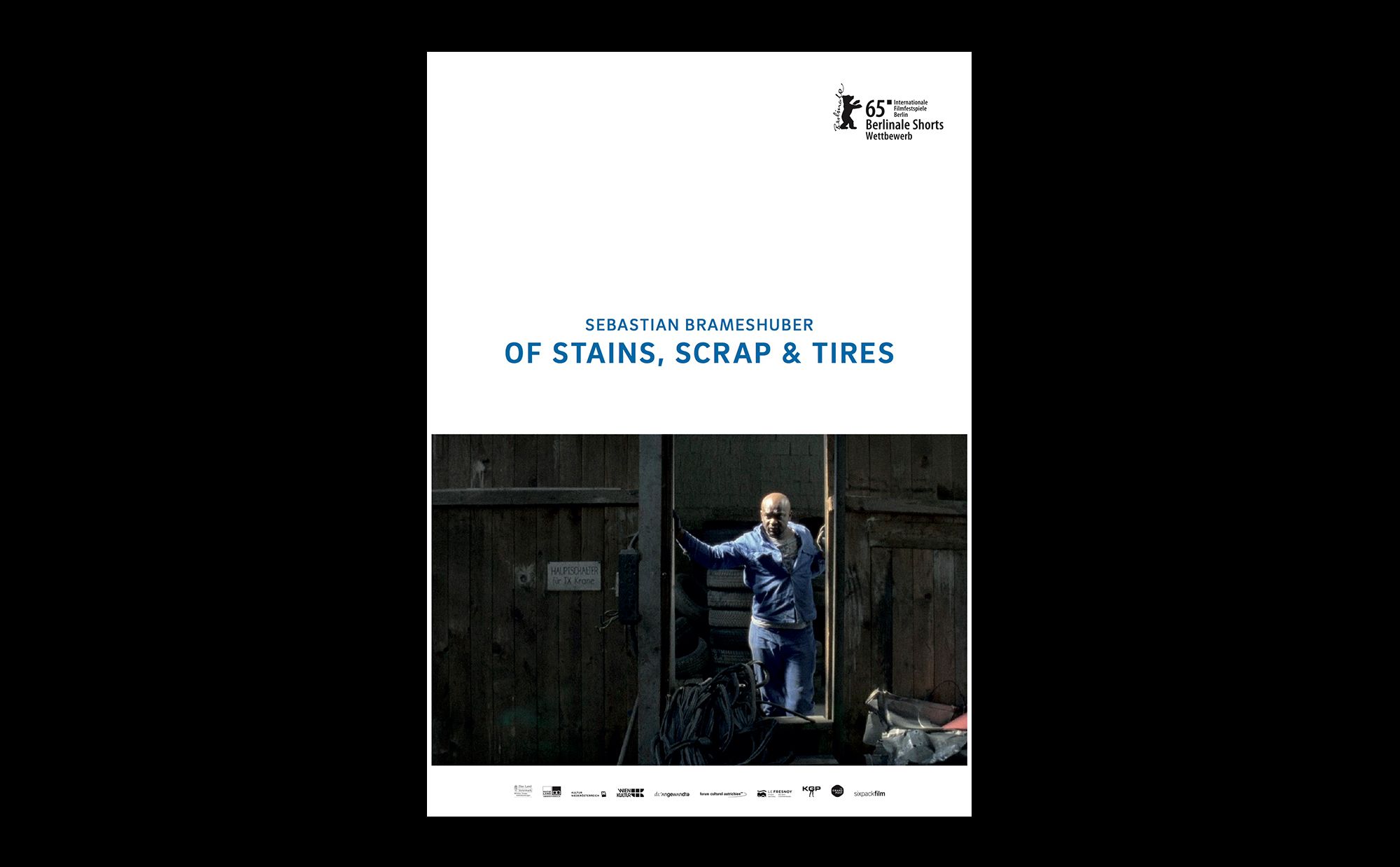
Poster art based on a filmstill.

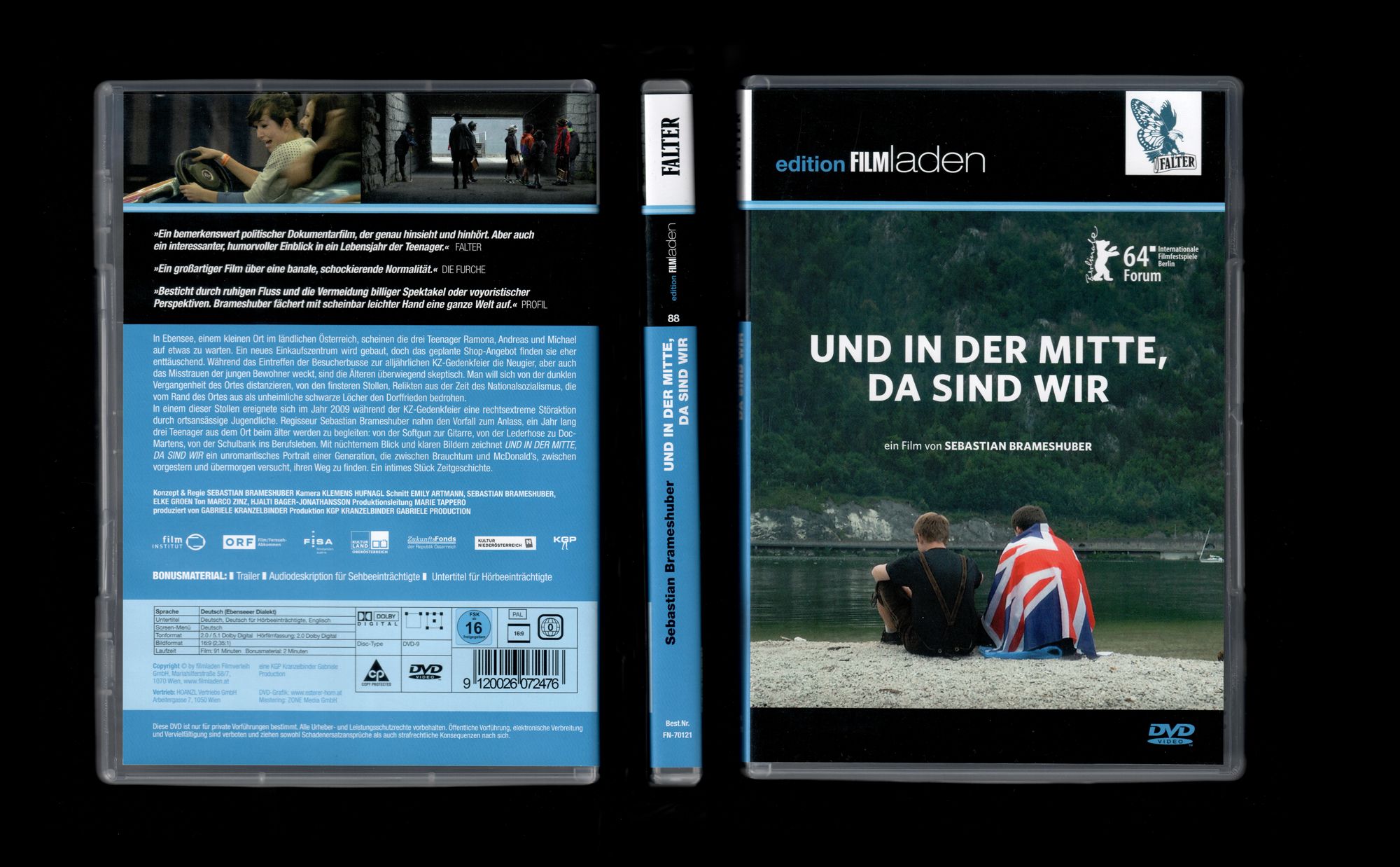
DVD, 2015, Edition Der Österreichische Film / Der Standard, No. 274, Austria

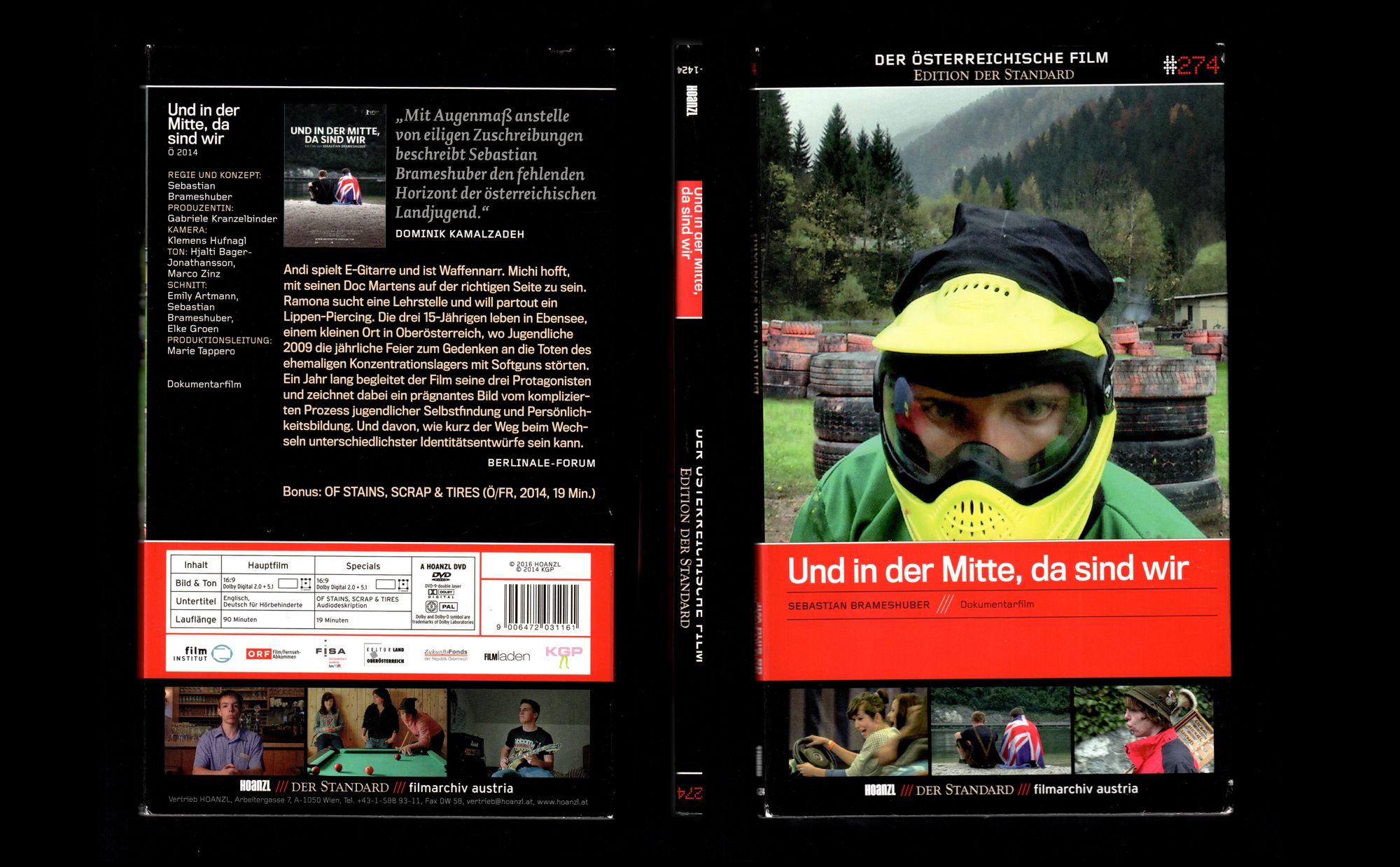
DVD, 2015, Edition Filmladen / Falter, Austria

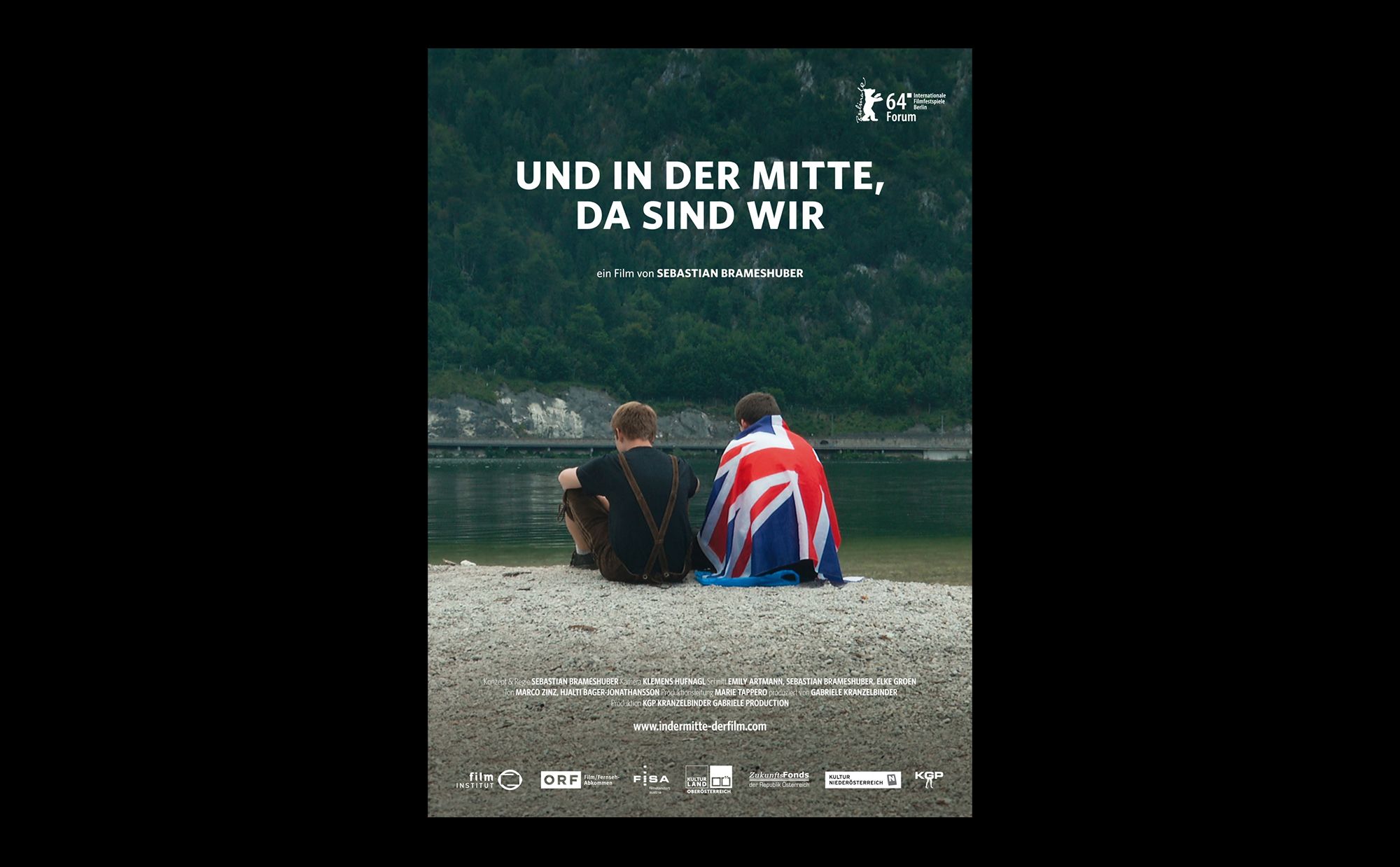
Poster art based on a film still.

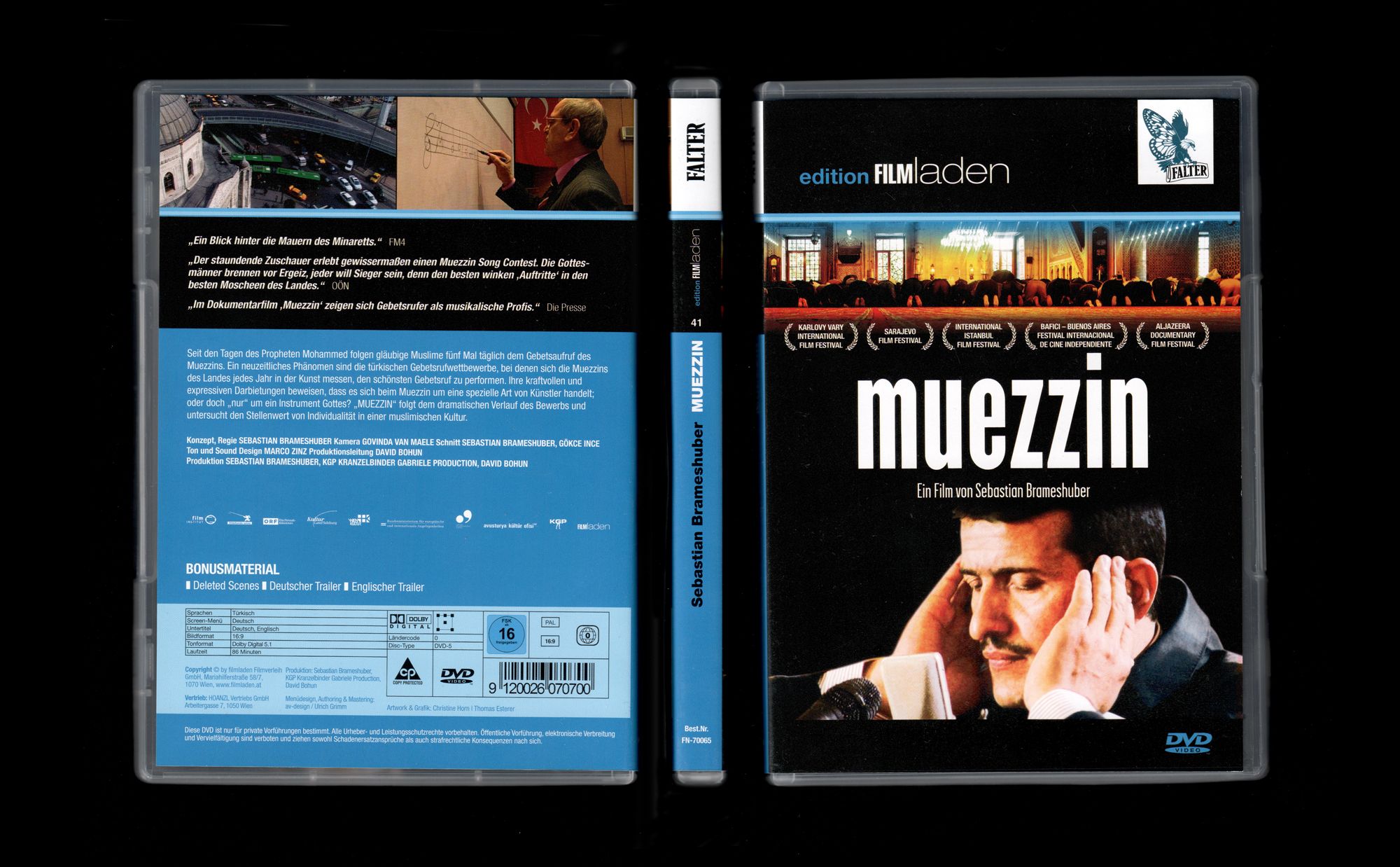
DVD, 2010, Edition Filmladen / Falter, Austria