
In, Over and Out
An experiment in structural cinema, made up of a limited number of carefully planned motifs, each of them shot simultaneously with twelve cameras from different technical periods. An homage to the Lumière Brothers' Workers Leaving the Factory, this film is a journey in time through the history of the moving image.
Country, year
Austria, France, 2015
Runtime
10 min
Concept, directing, editing
Sebastian Brameshuber
Cinematography
Klemens Hufnagl
Video sequencer
Matthias Strohmeier
Martin Reinhart
Matthias Schellander
Sound design, re-recording mix
Simon Apostolou
Production manager
David Bohun
Elodie Wattiaux
Production
Le Fresnoy, Studio national
Südufer Film
Film format
various analog and digital formats
Screening format
DCP 2k, 1:1.85, Dolby 5.1
Supported by
BKA Innovative Film
Wien Kultur MA7
Kultur Land OÖ
ZKM Karlsruhe
Distribution
sixpack film
World premiere
Viennale 2015
Festivals (selection)
Viennale 2015
Karlovy Vary International Film Festival 2016
BFI London Film Festival 2016
EXiS – Experimental Film and Video Festival, Seoul 2016
Alternative Film/Video, Belgrade 2016
VIS Vienna Independent Shorts 2016
NexT International Short Film Festival, Bukarest 2016
Glasgow Short Film Festival 2016
Nashville Film Festival 2017
Le Rêve des formes, Palais de Tokyo, Paris 2017
Floating Projects, Hong Kong Arts Centre 2017
Le Fresnoy : 20 ans de création, Villa Medici, Rome 2017
Awards
Significant Achievement, Alternative Film/Video, Belgrade 2016





1/5
Excerpt from the interview “A Distrust of Myself, of the Other Within Myself” by Alejandro Bachmann — P. 6
by Alejandro Bachmann
From Bilder, Falten (Le Studio, Edition 1)
Dizzying syncopation
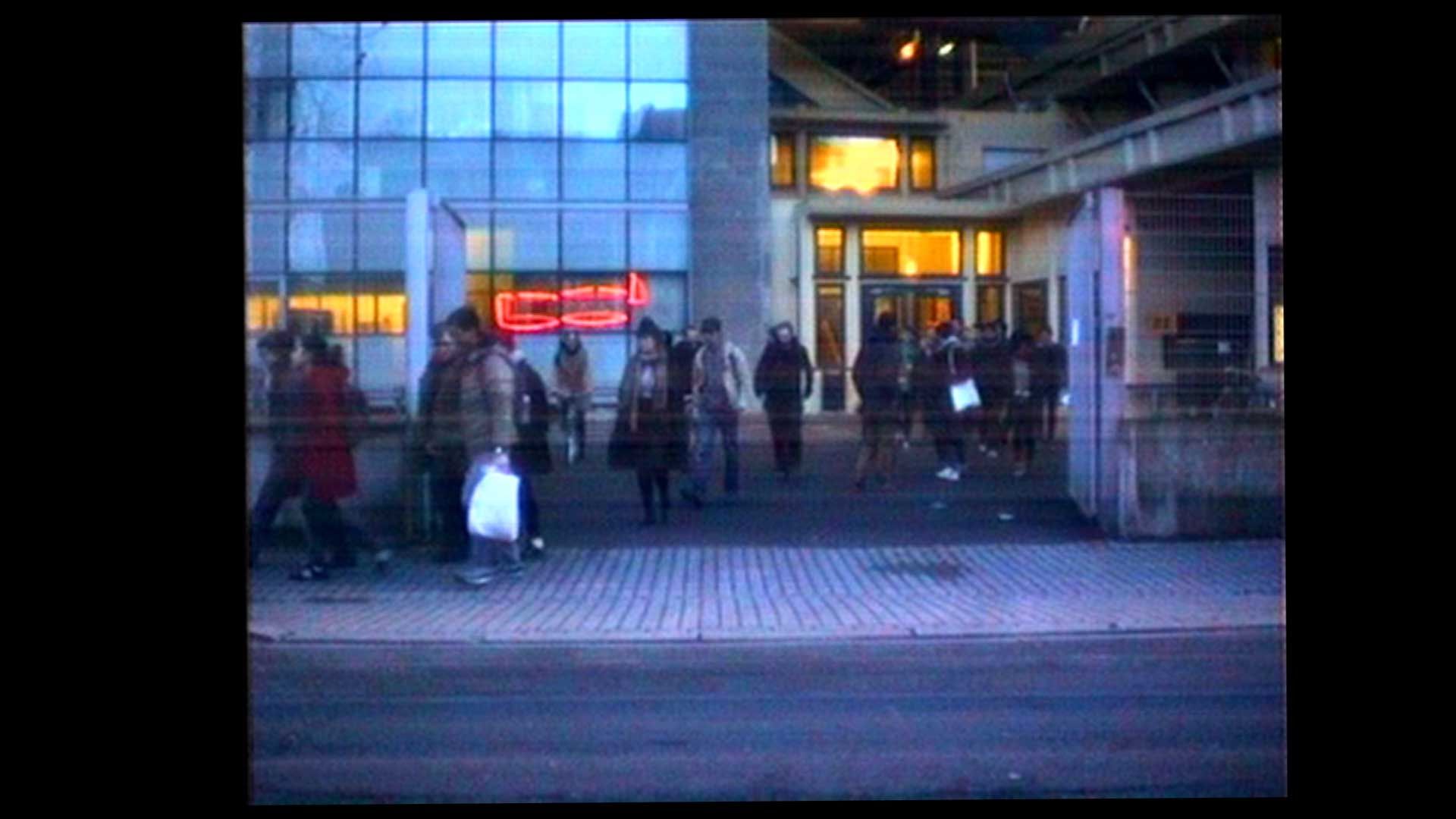
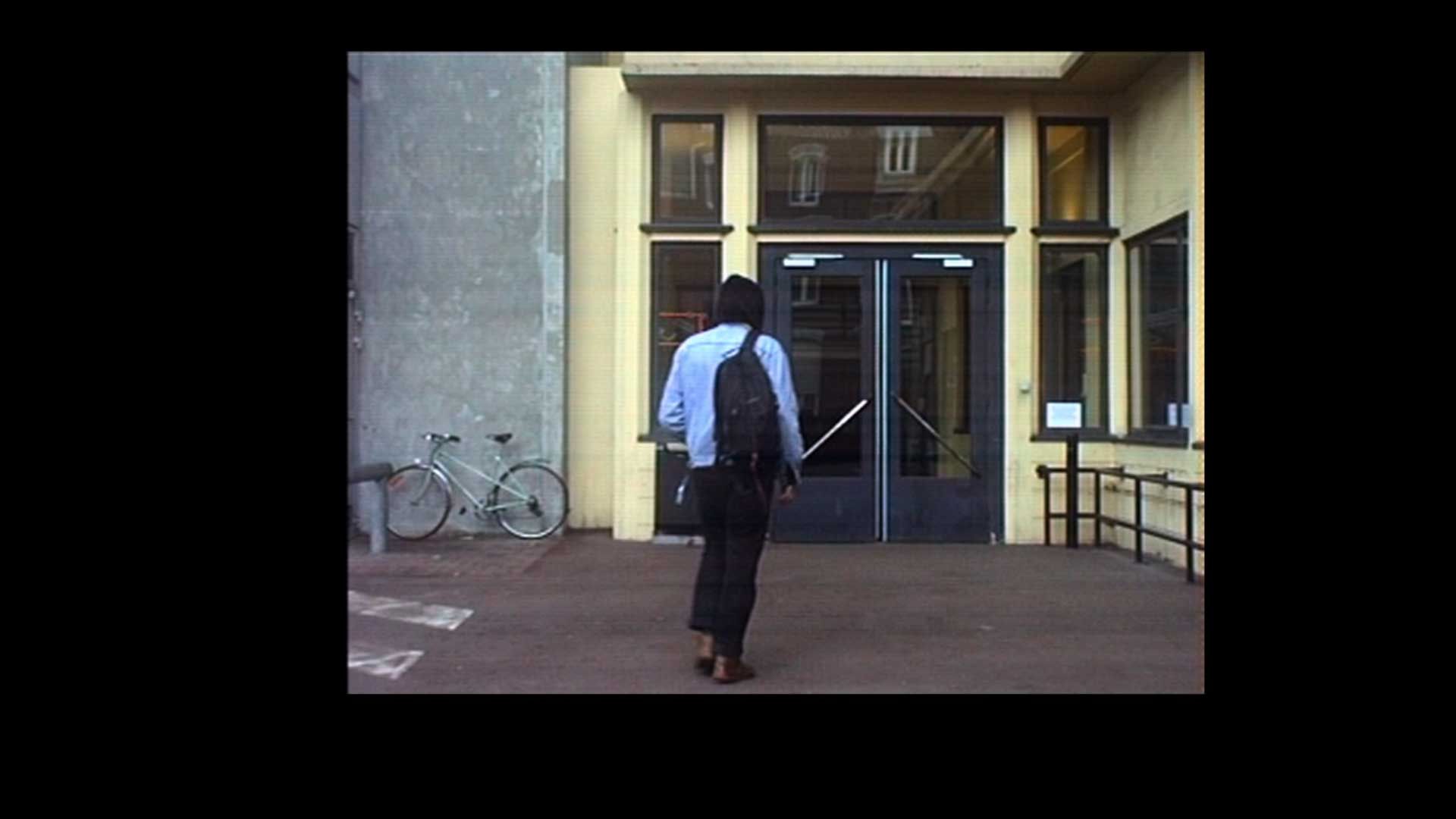
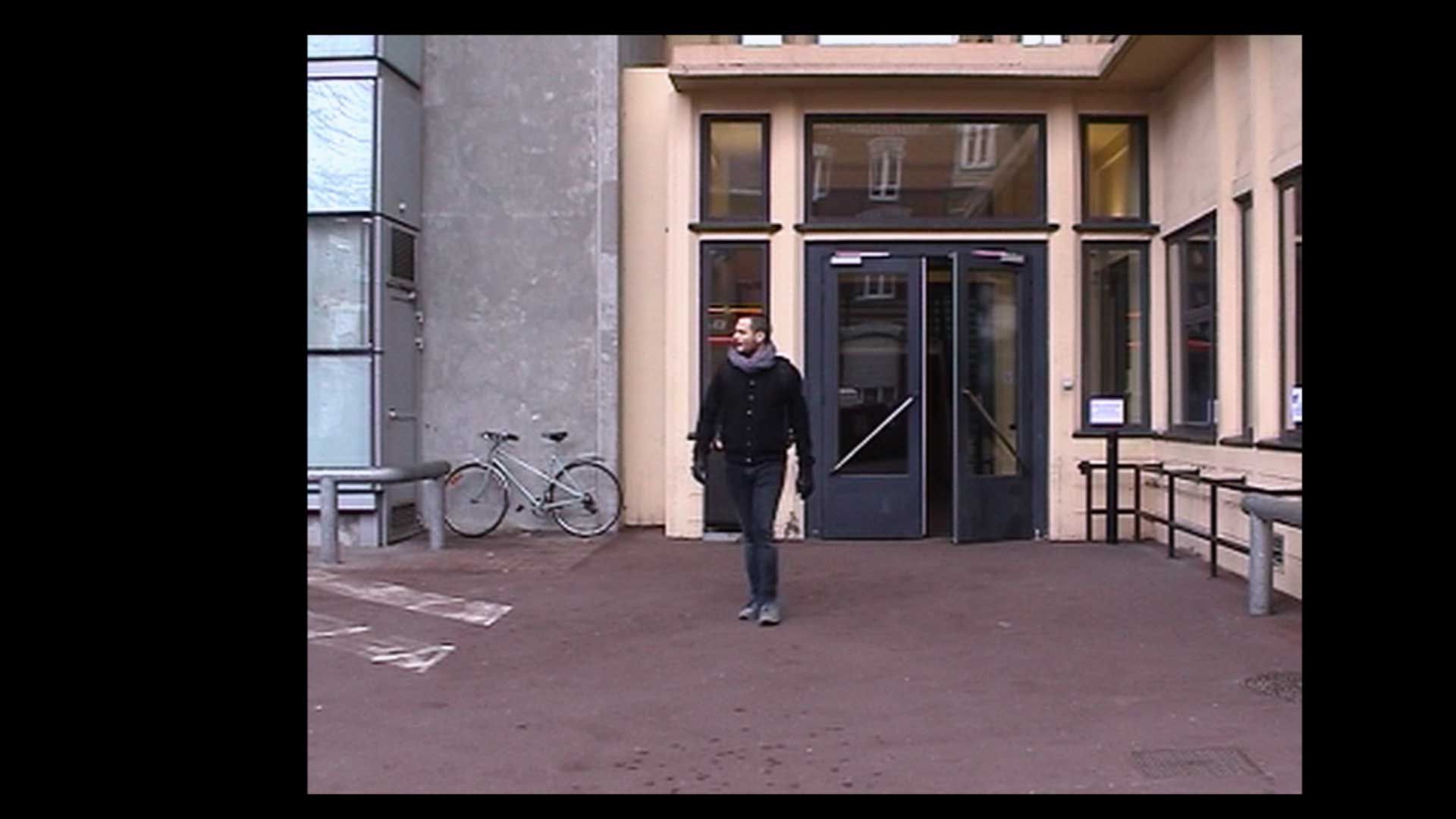
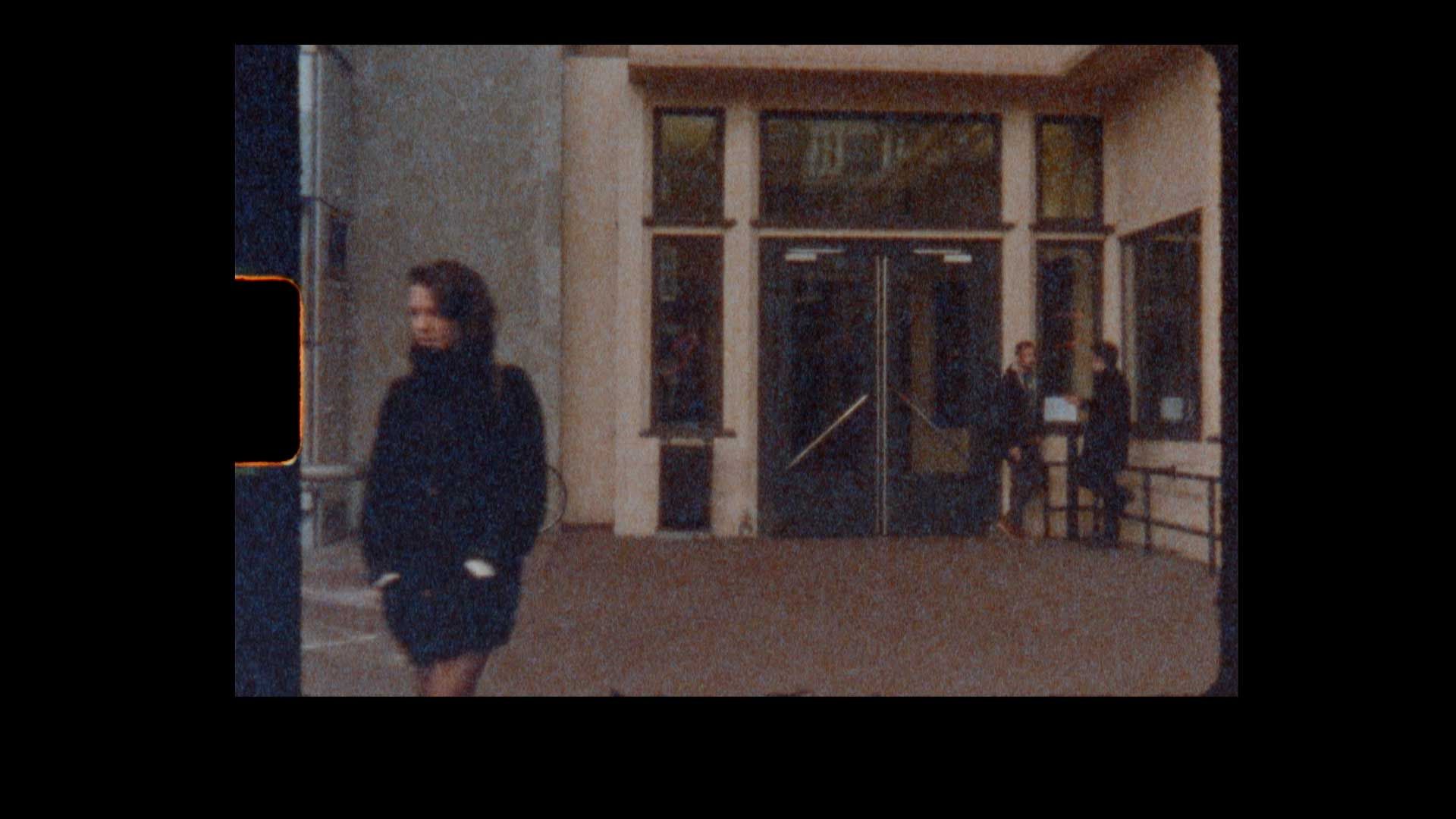
There have been countless tributes made to the Lumière Brothers´ Workers Leaving the Factory since it was first exhibited in 1895, but few have been as technically ambitious, aesthetically assaultive or conceptually compelling as Sebastian Brameshuber´s In, Over & Out. The main bulk of the action here depicts a small courtyard, with young adults entering and exiting the double-doors of an ostensibly anonymous building. This isn´t a factory in the traditional sense, and the cast members don´t belong to the industrial proletariat as they may have done in the Lumières´ film. The shooting location here is the staff entrance at Le Fresnoy, the prestigious art school in Tourcoing, France. Founded in 1997, it was a popular entertainment site for local workers between 1905 and 1977.
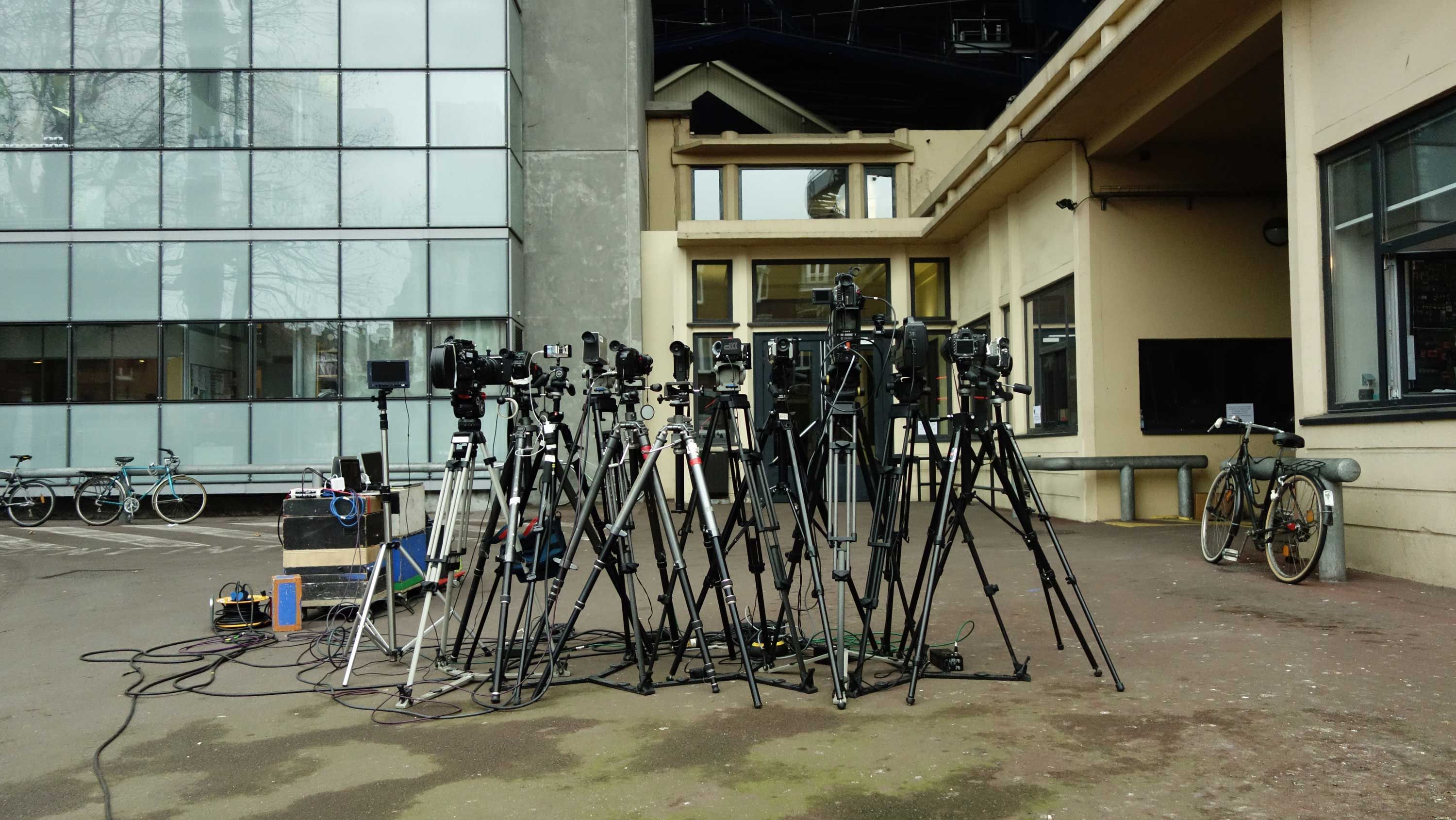
Brameshuber captures this most quotidian of gestures, rinsed and repeated since the very start of cinema, with twelve simultaneous cameras—all arranged along a simple enough x-axis and encompassing celluloid, analogue video and digital formats. With dizzying and enthralling syncopation, he proceeds again and again between these formats with the use of a specially made video sequencer. With only half a moment for each blink-and-miss image to register, we only have the rapidly fluctuating aspect ratios, the continual left-to-right succession between formats, and the dramatically varied audiovisual textures as clues of the film´s practical mechanisms. The visual set-up allows us to see and capture a single moment that in fact comprises an entire history of moving-image technology. Put another way, Brameshuber lends a new sense of technical awe to an otherwise routine film scene some 120 years after humans first saw it.
sixpackfilm
Michael Pattison
Dance of Space and Time
Time is of the essence in Sebastian Brameshuber’s kinetically mesmerizing In, Over and Out. The action of the film was simultaneously shot by an array of twelve cameras set up along an x-axis, ranging from Super 8 and Super 16mm cameras to antiquated tube and early digital video devices, including an iPhone 5s. Brameshuber subsequently used a very basic video sequencer to create rhythmic patterns that organized the images as if they had been shot by one single camera. The soundtrack was built from original recordings by cameras with microphones in combination with those without. The resulting motion picture artifact of media archaeology presents a cognitively challenging artwork of existential beauty.
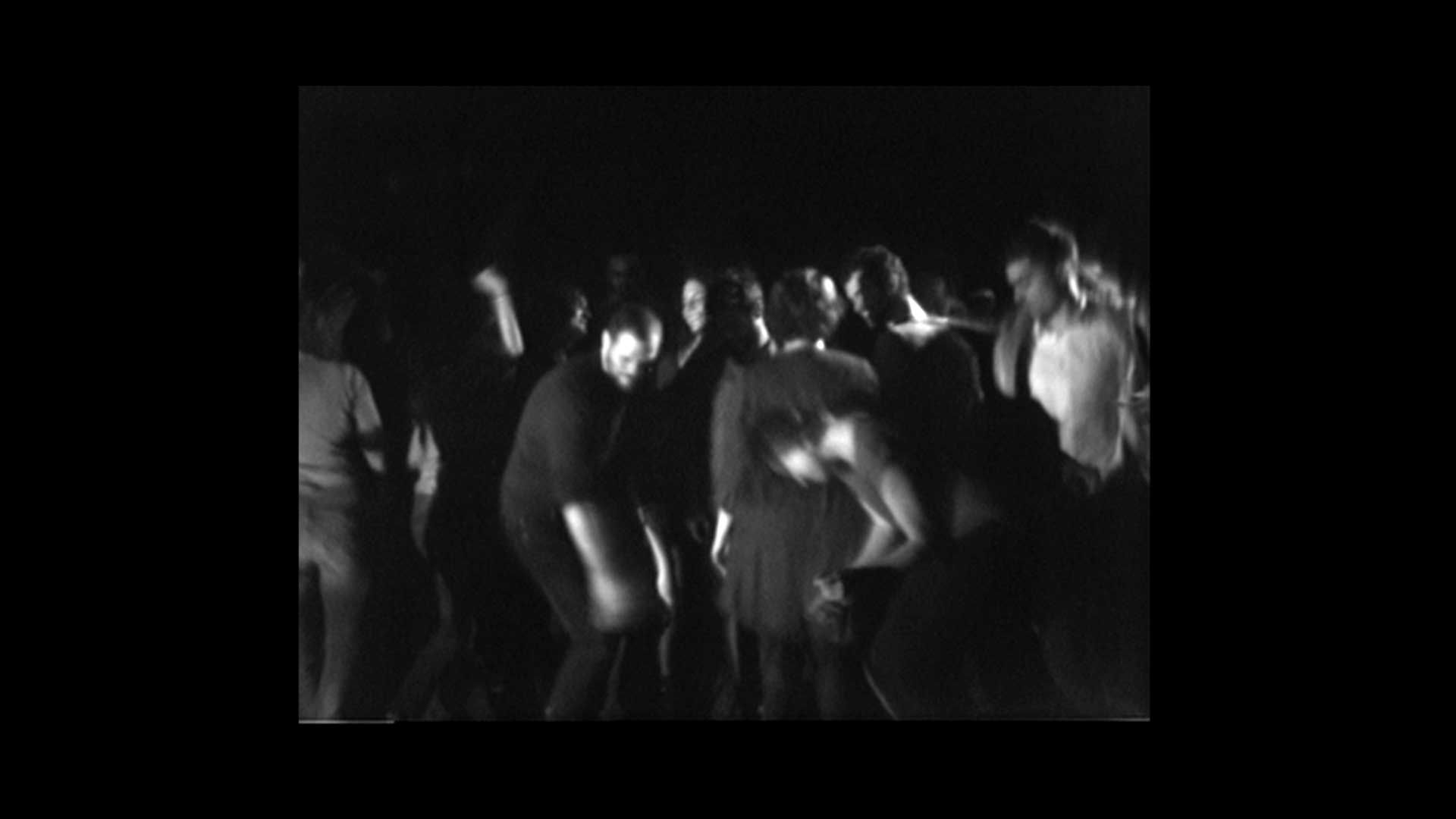
In, Over and Out begins by exploiting the traditional dark screen at the opening of films to present the absence of light and sound uniquely captured by each of the twelve cameras. The end credits will later list the devices “in the order of their appearance,” as if they were actors in the film—in a very real sense they are just that. Soon the game begins. A colorful group of young people is seen dancing. The slight difference of each camera’s position in regard to the action and its distinct rendering of image and sound highlights Brameshuber’s sampling.
The main section of In, Over and Out follows a clear albeit paradoxical arc. A medium long shot shows students entering and exiting a building. Gradually their comings and goings kinetically interweave and all sense of linear reality dissolves into a cinematically multi-perspectival cubist collage. Then the screen suddenly goes silent. A man emerges from the building in slow motion. A sublime sense grows in the slowed stillness, as the individual gradually advances and intricately unfolds a dance of time and space in his own right. This existential sense informs the concluding long shot, showing the building at night in the background as everybody pours out into the street in sampled motion. Suddenly the sight of them recalls La Sortie de l’Usine Lumière à Lyon (1895), folding the idea of yet another layer of media history into the multifaceted time capsule that is In, Over & Out.
From Bilder, Falten (Le Studio Edition 1)
Eve Heller