Essentially, there is one central fictional arc that allows the film to branch out in different directions, mainly in a documentary mode. The central arc tells the story of Bobby, who visits Arthur for months until he eventually passes away. That story is narrated in very restrained, fragmented fashion, and gains emotional heft for precisely that reason. When you and I conducted a similar conversation last time, back in 2018, I mentioned that Movements of a Nearby Mountain represented a sort of liberation for me in terms of having the courage to included increased amounts of stylisation in my films – based on my experiences during my studies at Le Fresnoy in France. For its part, London was preceded by an emotional learning process, although this time the school was life itself. My father died unexpectedly in 2019, and I often had to drive back and forth on the Westautobahn between Vienna and the Salzkammergut, the region where I’m from. Back then, something opened up in me at an emotional level – and never went away again, even after the active stage of grieving was over. Two years later, my son was born, and I opened up even further. It was important to me that this shift in my thoughts and feelings be expressed in the film – which, given my more sober disposition, also in my work, required me to step out of myself. That’s ultimately why the film is so much about fathers and sons, parents and children, about the beginning and the end of life – about what comes before us and what will endure after we’re gone. For Bobby, growing old and losing friends that he might have wanted to say something to, was also becoming an increasingly intense experience.
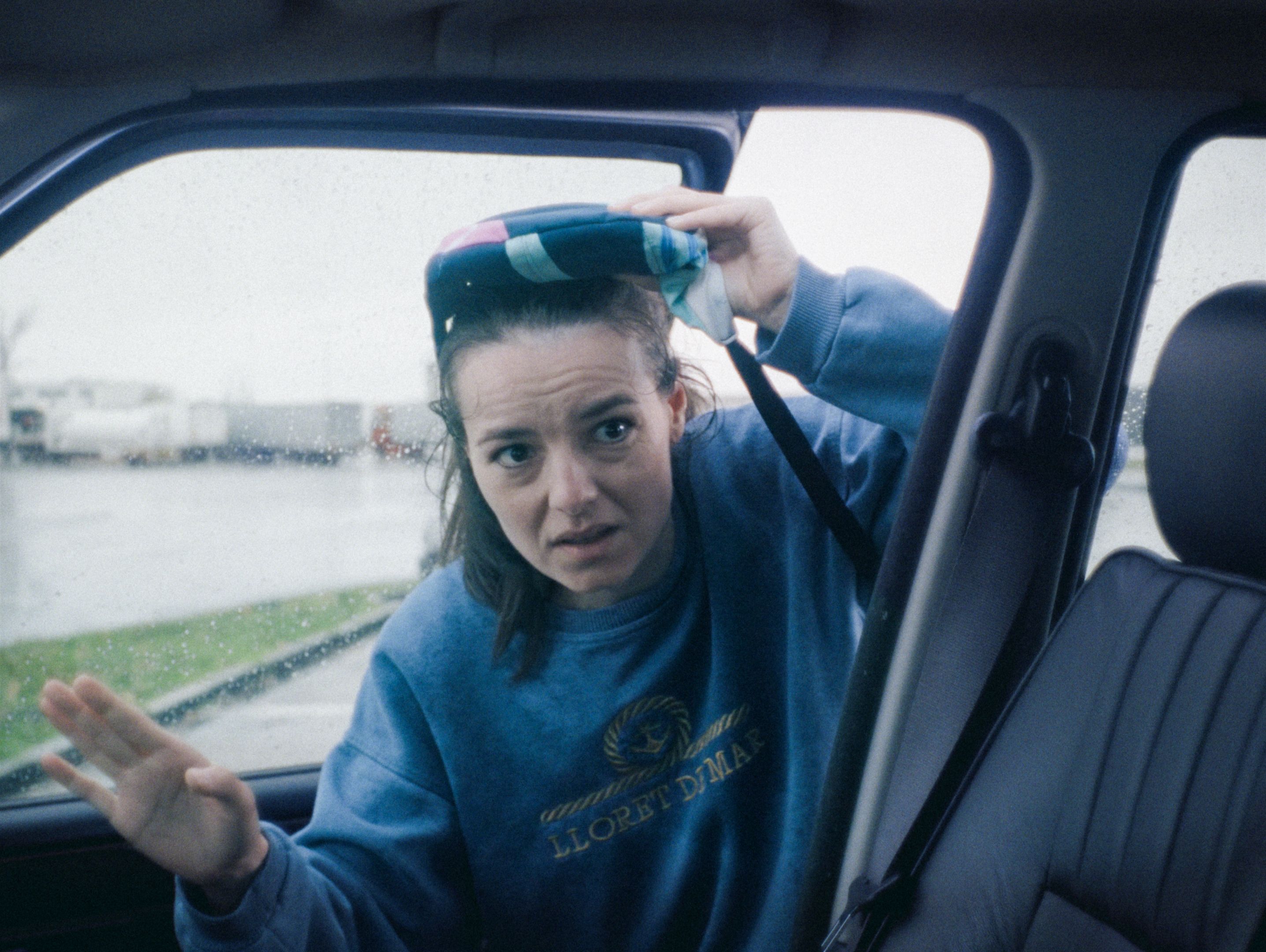
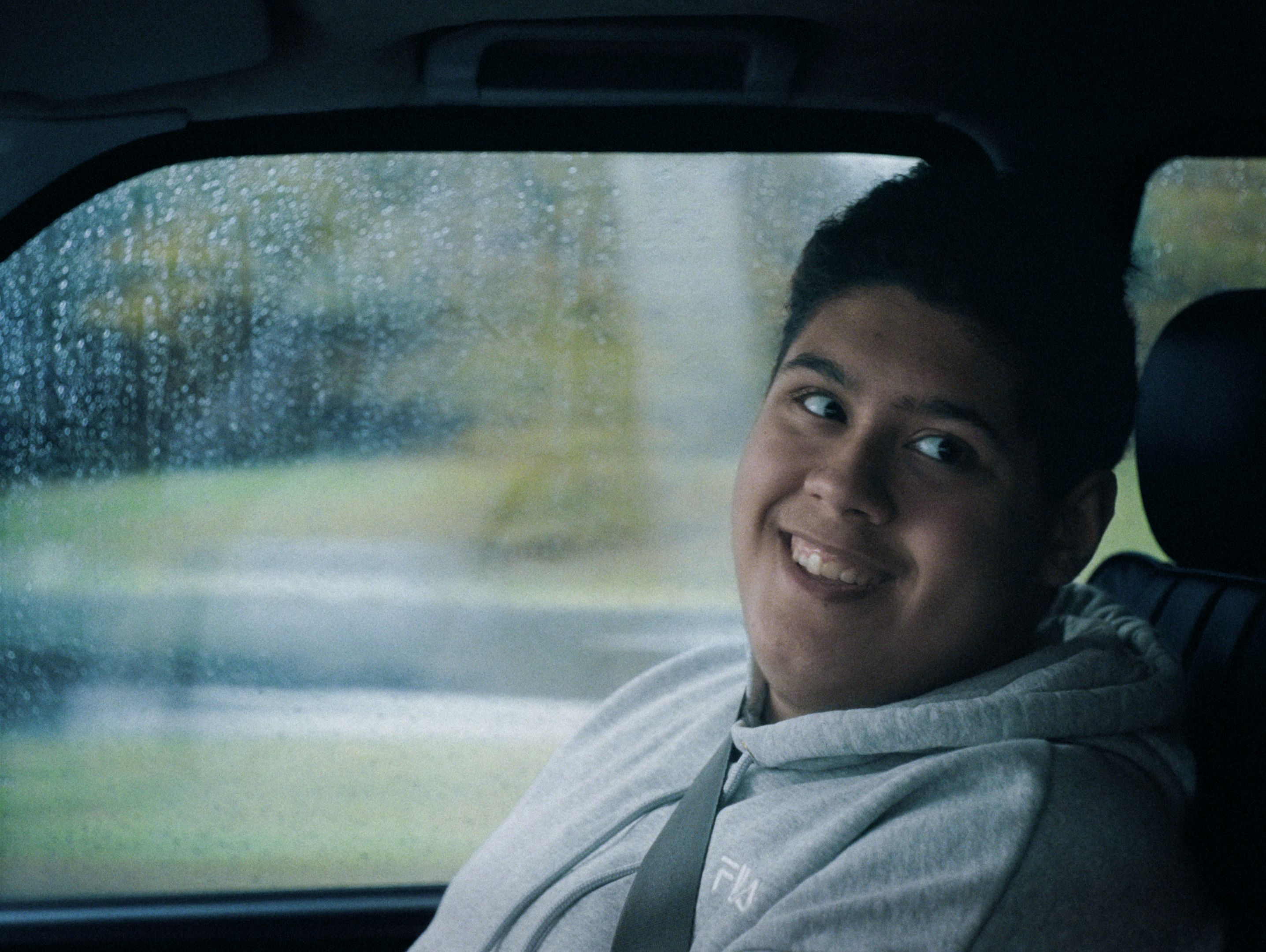
As far as the “characters” alongside Bobby are concerned, it’s probably best to describe the process in order to make clear how their specific portrayals came about. There was a casting aimed at finding very specific people – such as conscripts. Paul, the first passenger, was doing his compulsory military service at the time of the casting; by the time we started shooting though, he’d already completed it a few months previously. He thus relived his recent past for the film. But how he actually did that, how the conversation would develop, how he would express his moral reservations about his position – which I knew he had – and how Bobby would react, all that emerged directly during their joint “trip” in the studio.
Their encounter resulted in at least three hours of material, around an hour and a half on each side of the car. Only just under 15 minutes of that is in the film though – a heavily condensed version of their encounter in terms of both atmosphere and content. It’s also the only trip during which the light conditions change so strongly, because it starts off sunny, then gets darker and finally becomes night. That was planned in the hope that the content of the conversation and the lighting mood would work together to create an atmosphere, although it was unable to be controlled, or only to a small degree. We ran the risk that passages that belonged together would not be able to be combined in the montage because of the differing light conditions. But for this first trip, which was supposed to set the tone of the film, it was important to take that chance.
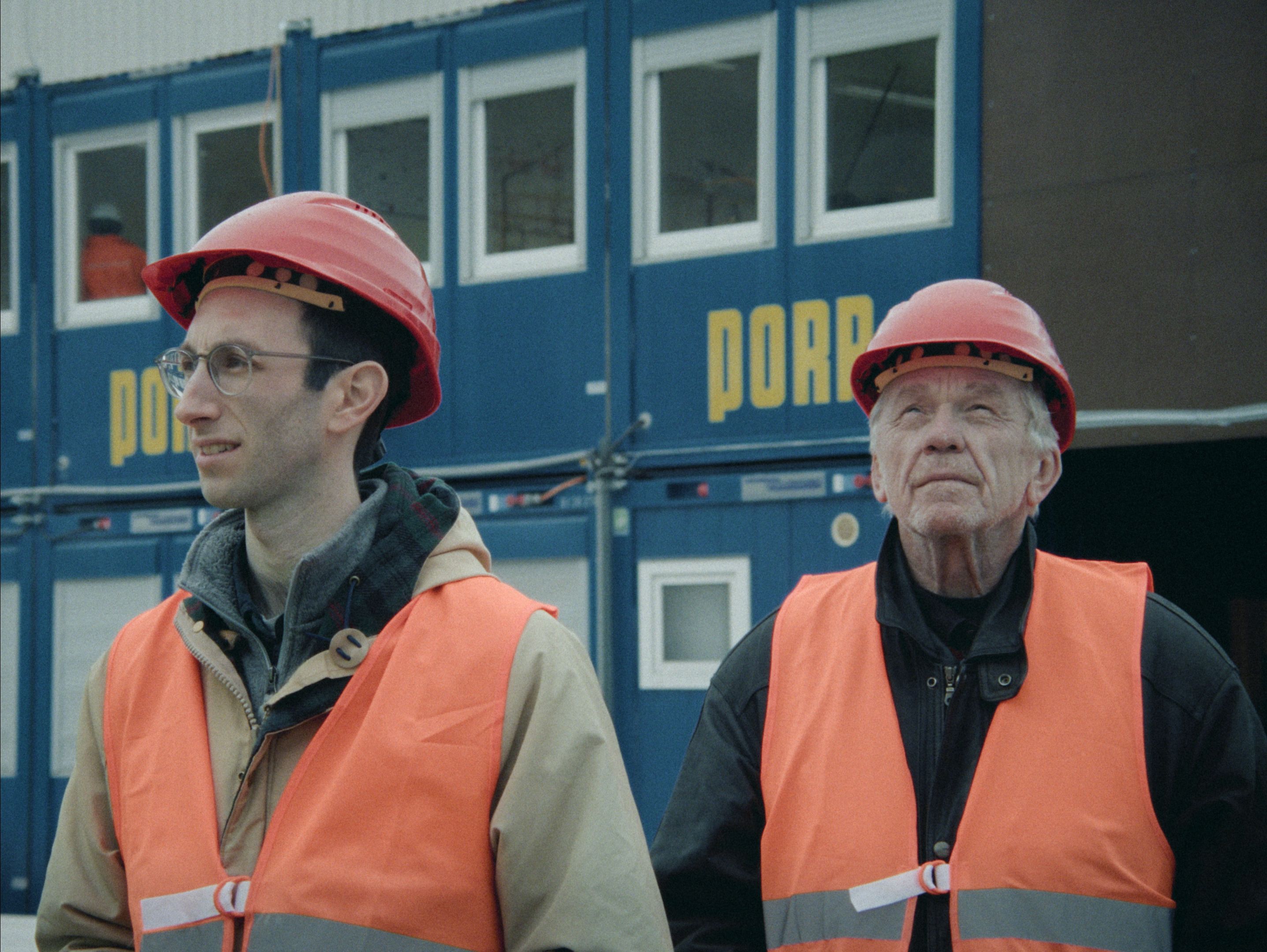
On the other hand, we also created a very vague casting profile to find younger people whose characters, biographies and immediate life situations would make them into interesting passengers to play a version of themselves in the film. They were basically supposed to be “good people” who wear their heart on their sleeve and would be willing to get talking with Bobby about their lives or life plans. It was slightly different with Fred, whose character is closely linked to the real character of the performer, filmmaker Ted Fendt, although his interest in the history of the motorway is invented, as well as with Anca, the Romanian migrant worker who Bobby picks up along the way: Anca Cipariu is the only professional actor in the cast.
There is a constant interaction between documentary and fictional strategies which permeate each other, although the fiction elements were more minor and always of a functional nature – in the sense that they gave the wealth of documentary, improvised material that emerged from the freely conducted conversations a form, a direction and a frame. Much of what now comes across like a deliberate choice – in particular when the mood of the weather and light seems to fit to the content of the conversation – was actually created autopoietically. That’s a mechanism that shouldn’t be underestimated – provided that the framework conditions have been set out in narrow enough fashion for it to function.
To sum up, my idea was to use the cinematic apparatus to shape the improvised, documentary immediacy of the encounters – which made up the majority of the raw material – in such a way that what’s been filmed to certain extent becomes untethered from its factual basis and an “impure” documentary cinema is produced that oscillates between the real and what extends beyond it.
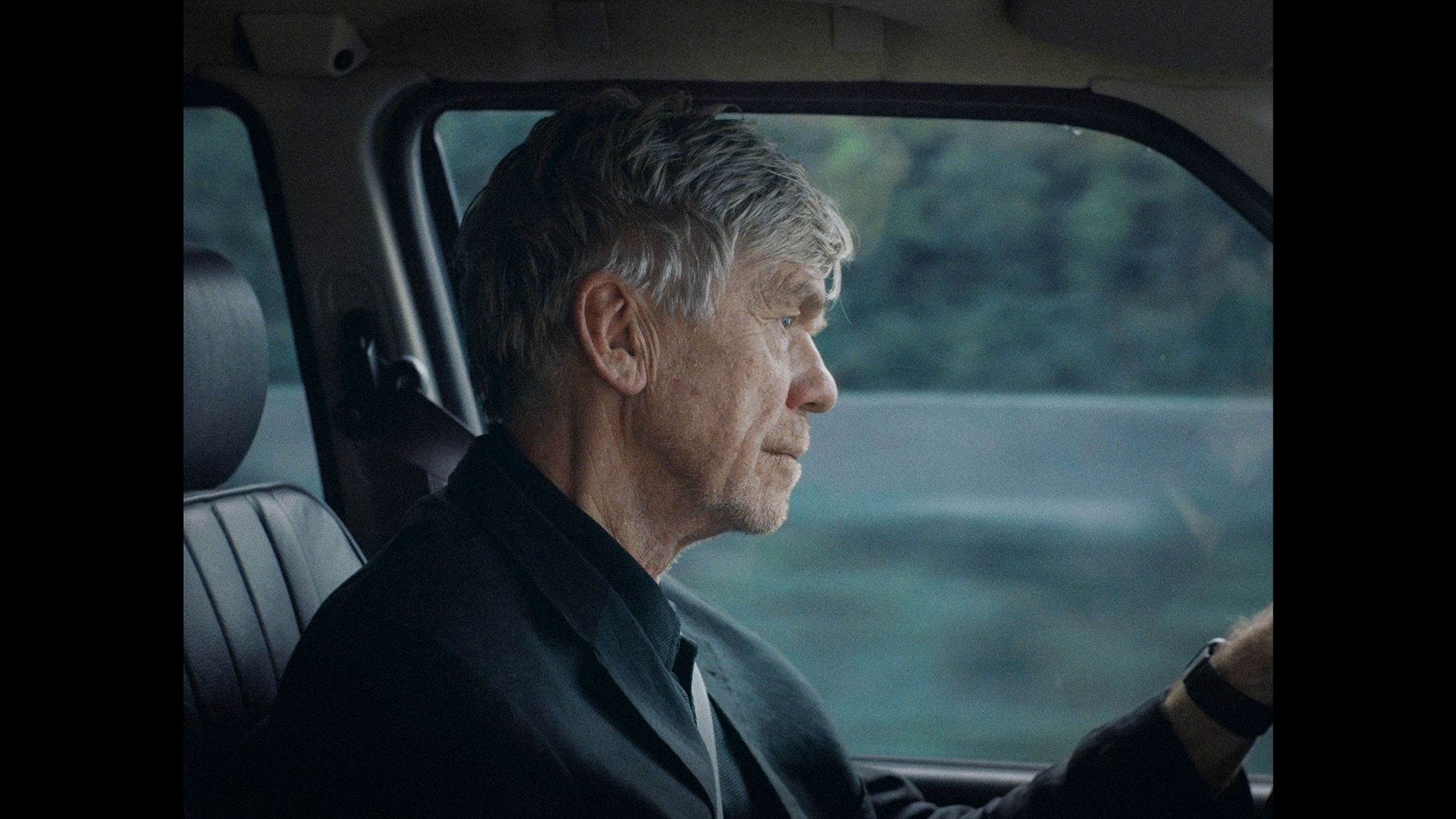
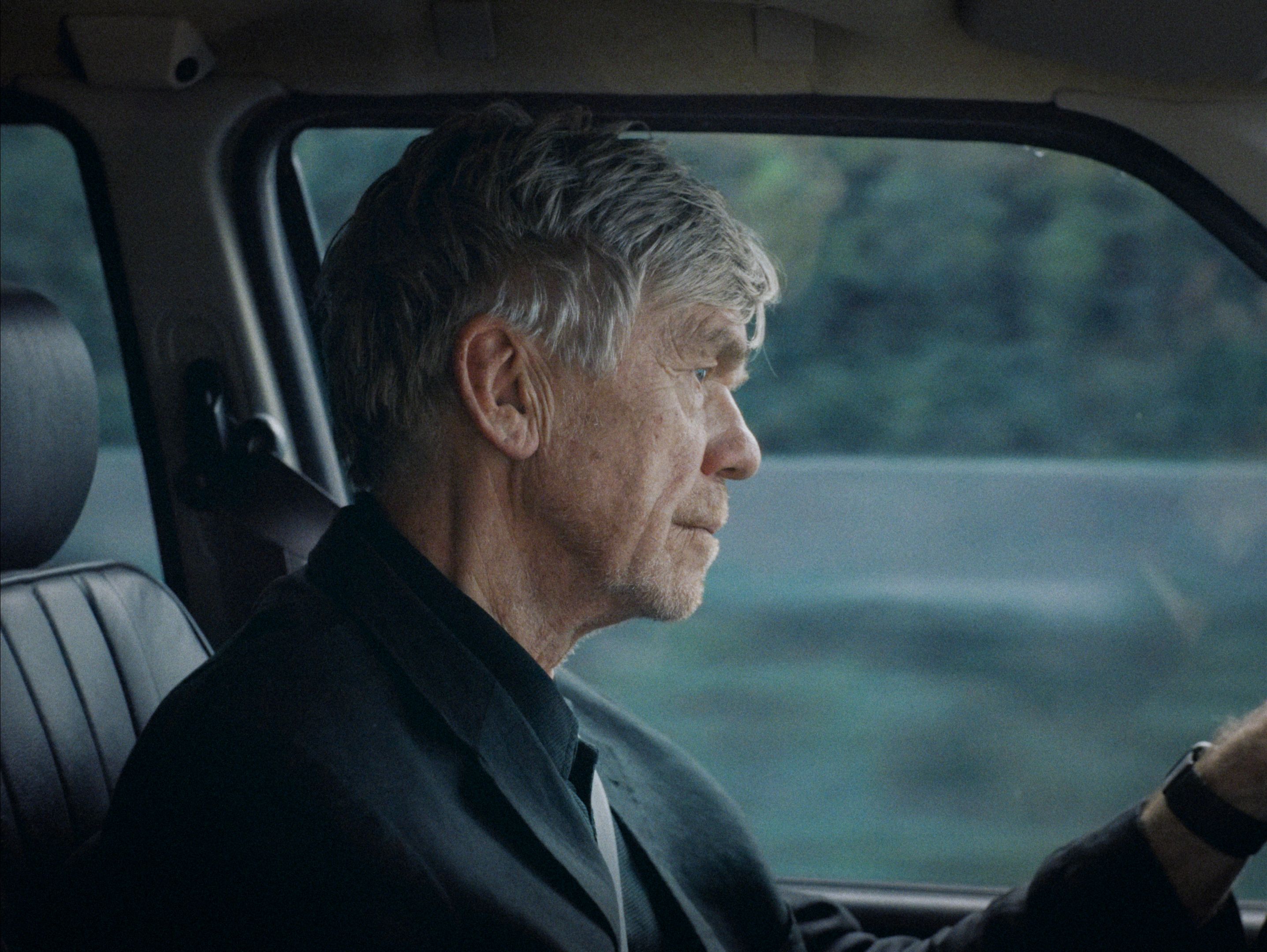
The corresponding space for this was able to be created in the studio on several different levels. On the one hand, it functioned as a sort of “concentration machine” that did away with the uncertainties and risks of shooting in a car racing down the motorway – and not just in relation to life and limb. It was mostly silent in the studio, a silence that was full of concentration or that I would almost describe as monastic; in a moving car, those speaking would have had to talk over the engine and the sounds from outside. The sound levels of the film and thus also its entire tonality would have been completely different.
It’s similar with light: the name “Westautobahn” suggests that the motorway moves directly westwards, but there are obviously curves in the road and the sun can change position entirely over the course of just a few minutes or kilometres. This means that it would have been impossible to avoid the shadow of the camera or the microphone covering the faces of those being filmed at certain points. The camera position we chose – and thus the focal length and framing – would also have been impossible outside the studio; it would have demanded considerable aesthetic compromises. But it was important to me to give these conversations – that raw immediacy that deliberately didn’t focus on conflicts but rather works with the quotidian as a material – a lustre and a dignity that allow them to transcend their seeming banality. The strange thing is that when you directly experience something in real life, your consciousness filters out the accompanying circumstances, also in your memory. I didn’t notice that I had to speak louder and I didn’t care whether the sun was shining or from what direction it was doing so; I was only aware of what was important at that moment – the person I was speaking to, myself, the encounter.
It’s different in cinema. To achieve what was important to me, I needed a certain amount of artificiality in order to create the naturalness and concentration I was looking for in the first place. Working in the studio to avoid the unpredictability of the real-life shooting situation allowed the human encounters there to be given the greatest possible space in turn to actually happen and unfold freely.









A Quiet Revolution
From Vienna to Salzburg and Salzburg to Vienna, Bobby, a retired man, shares his car with people younger than himself, sometimes still in their teens, whose features and accents reflect a variety of origins – among them, we recognise Cliff, who appeared in some of Sebastian Brameshuber’s previous films. The tone of the conversations varies; some are functional, reduced to their simplest form due to a language barrier, others turn intimate in an instant. An anti-dramatic narrative unfolds. Working with non-actors who elaborate characters based on their lives, Sebastian Brameshuber strips fiction of its illusionist and escapist functions, but uses its power to create situations that wouldn’t happen naturally and boil them down to their essence. His minimalist mise-en-scène highlights each face, polishes each fragment of existence like a diamond.
Although the film takes place almost entirely along the route connecting two cities, ellipses break up this line. Just as the lives of the passengers before and after their journey remain off-screen, we are free to imagine the beginning and/or end of each conversation. Rather than subjecting our perceptions to a plot, the film sharpens our awareness of the present, and develops under cover. Bobby’s trips are motivated by a special relationship, rooted in the intensity of youth: he drives to Salzburg to visit a long-lost friend who suffered a stroke and is in a coma. He says he didn’t want to start a family in order to preserve his freedom, yet now, his car becomes home to a series of micro-communities.
At a time when ideologies tend to emphasise homogenous units – the individual, the family, the nation –, the film highlights other types of connections. The fact that the landscape surrounding the travellers remains mostly in a blur also counters the nationalist agenda: a passenger explains that fascist Austria traced roads in such a way that the ‘motherland’ would look its best, but we see none of that. Bobby seems to grow as his encounters put him in touch with different parts of society. In return, he shares what he has to offer: the perspective of a man who has lost all greed, imperious desires and fear of missing out, and now sees life in the rear-view mirror. Some passengers read the world politically, while others focus on the immediate or the personal. We can tell that they didn’t all start out in life with the same opportunities.
However, by placing them successively in the same seat, and the same frame composition, the film emphasises continuity over dissonance. The reasons for the passengers’ journeys vary, and their interests may diverge from Bobby’s, yet Brameshuber chooses to capture moments of convergence. His camera adopts the point of view of the driver or the passengers, imitating the curious gazes that circulate within the vehicle. Each passenger has something in common with Bobby – don’t we all? Gradually, their perspectives add up to form a picture of the present. The ever-repeating journey takes on a metaphorical dimension. It seems to encapsulate our shared time on a shared planet, which seems to be getting smaller and smaller. The car, the quintessential symbol of individualism in prosperous societies, appears to have transcended its original purpose here.
While it still provides a sense of freedom, the carefree attitude of the post-war boom era now only survives where there is denial. London captures a reality where precariousness is rife, and cars are shared with strangers for economic and ecological reasons. The changing weather, varying light, and incessant movement around the travellers make us aware of the passage of time. Just as travellers in the car are paradoxically still and moving, they share a moment in the present while also travelling to the past. The car sometimes feels like a time machine, as the stories of the passengers bring back Bobby’s memories. Just like the present time and space, the past is something that Bobby and his passengers share.
Their conversations conjure up the wars and ideologies that shaped the 20th century. Their ripples can still be felt as they reappear today in new forms and shapes – Bobby meets a former-Yugoslavia-born queer activist, and the son of an Albanian partisan who reads Hollywood productions through a Marxist lens. Maybe we are already in the future, as suggested by a military checkpoint on the road, indicating that war or fascism has reached Austria and that underground activism has become a necessity. But wait, maybe that’s already true? Even before the film begins, the title ‘London’ takes us back to the two years Bobby spent in the English capital, and his subsequent return to Austria with long hair, at a time when ‘people would chase you with scissors’. Is the aging man heading towards a rediscovered dissidence? As he encounters the fragments of the world entering his car, he seems to become increasingly committed, as if these windows into the lives of others were gradually reawakening his consciousness.
By delaying the appearance of new characters and letting us hear their voices first, the film arouses our desire to get to know these people whom we will soon leave behind. It takes on a performative aspect: the human warmth it depicts also arises within us as we watch. What should one do with one’s freedom? The film poses this question both directly, when a passenger asks Bobby, and obliquely, through the succession of life stories. In a world that has lost its innocence, where the spectre of global war looms, the film quietly manifests the possibility of facing reality and taking a stand.
Olivia Cooper Hadjian
What Lies Ahead
An instant addition to the pantheon of great films that take place almost entirely inside cars, Sebastian Brameshuber’s London is a road movie that charts an existential course through the congestion of contemporary life. Like the best entries in this unofficial genre—James Benning and Bette Gordon’s The United States of America (1975), Jim Jarmusch’s Night on Earth (1991), Abbas Kiarostami’s Taste of Cherry (1997), and, most recently, David Easteal’s The Plains (2022)—the Austrian director’s fourth feature turns its vehicular setting into a microcosm of the outside world, while at the same time getting an impressive amount of mileage out of a concept predicated on reducing cinema to its spatiotemporal essence. Where London differs is in its perspective, in its engagement not merely with the lives of its characters and their cultures, but also the global and historical concerns they represent.
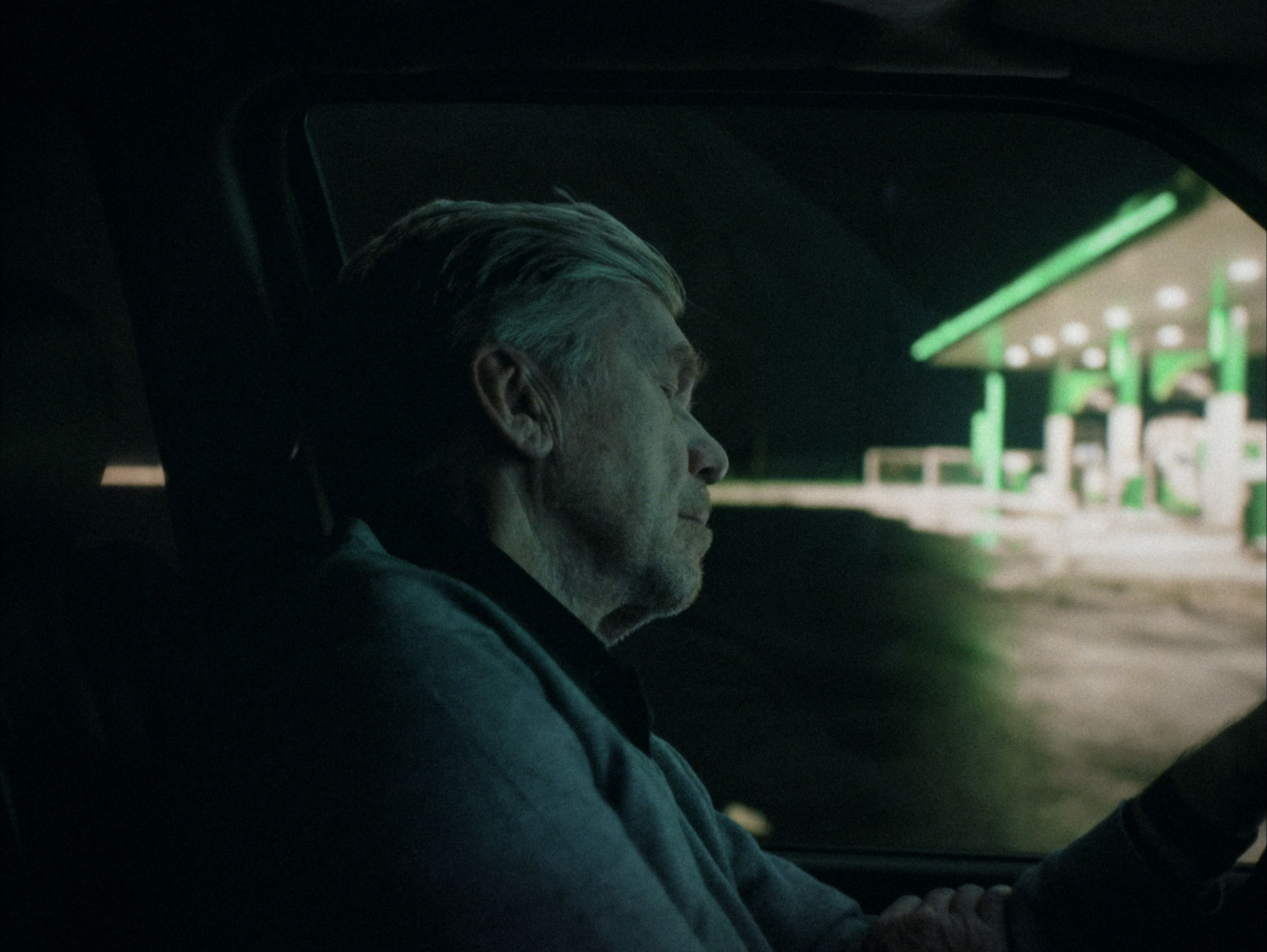
Set between Vienna and Salzburg, the film unfolds on the West Autobahn (or A1), a highway connecting the two cities whose picturesque route was originally conceived by the Third Reich. Over the course of 122 minutes, we watch Bobby (Bobby Sommer), an unmarried 72 year-old former museum ward and Velvet Underground fan, make the 350km drive back and forth with ten different passengers who he engages in everything from small talk to heavier conversations regarding friends, family, and the personal and political dynamics that define those relationships. In fact, it’s a situation involving Bobby’s longtime friend Arthur, who we learn is in a coma at a Salzburg hospital after suffering a stroke, that’s prompted these drives; the ride share component is convenient, to be sure, but it’s also therapeutic.
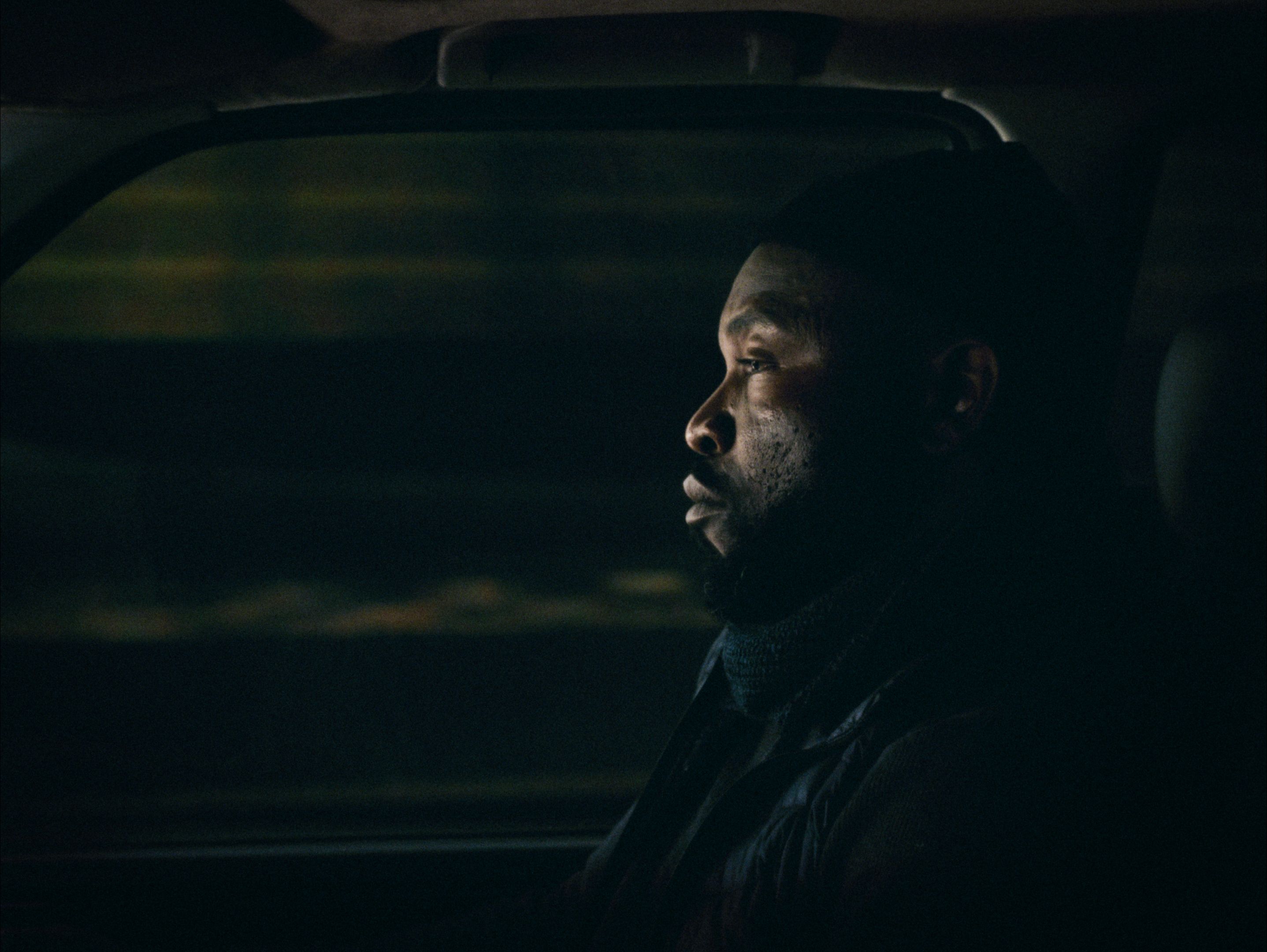
Bobby’s passengers comprise a diverse array of people of differing interests, ethnicities, and outlooks—and he’s equally attentive to all of them. No matter the topic of conversation, he evinces a genuine curiosity for the person sitting beside him, whether a disillusioned young soldier, a deli clerk with a sick mother, an African immigrant mourning his dead father, or a queer activist with conservative parents. Sometimes, he’s content to simply listen on, vaguely bemused, as when a budding communist and part-time movie theater employee extolls the Marxist virtues of Avatar (2009), or when a bespectacled history buff (humorously played by the filmmaker Ted Fendt) reveals that he’s on his way to photograph Nazi-era bridges before their pillars are destroyed. Other times, his companion’s stories prompt Bobby’s own reminiscences; in perhaps the film’s most revealing exchange (as well as the source of its enigmatic title), a heart-to-heart with a new mother traveling with her husband and child prompts Bobby to describe a traumatic moment in his youth when his father, disappointed in his son’s lifestyle, ignores him when they see each other from across a crowded train car.
For all its specificity with regards to both geography and the current sociopolitical climate, the film pays little mind to strict realism. For one thing, the driving scenes were shot entirely in studio, a not uncommon measure at any scale of moviemaking that Brameshuber turns into a subtly provocative formal gambit by simultaneously stripping these sequences of all but the faintest hint of outside noise, creating an aesthetic vacuum where variables of light and sound cede to a kind of profilmic truth. Fully aware that there are only so many ways to film people in a car, the director doesn’t attempt to find any sort of new angle or perspective—most of these sequences follow a basic shot-reverse-shot template, albeit without recourse to things like eyeline matches, with occasional shifts to POV when surveying the road ahead—but instead emphasizes the uncanniness of the enclosed space and the way that even the illusion of movement can suspend cinematic time.
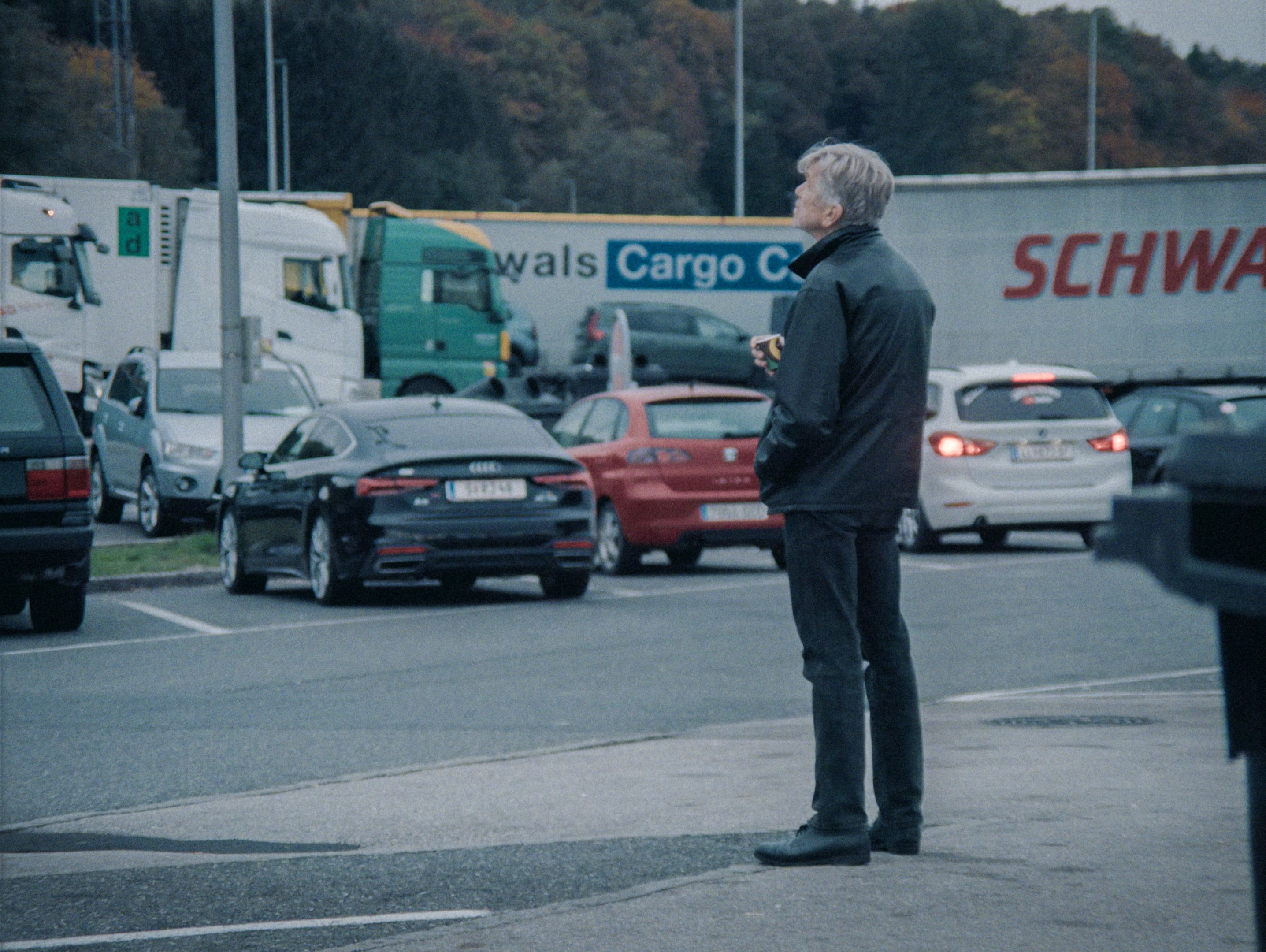
Indeed, despite the occasional scene set outside the car at a diner or a rest stop, the film generates a uniquely enveloping atmosphere, as if being held in a state of unconscious intrigue. Part of that intrigue comes from the information the film elides and the questions it raises but doesn’t necessarily answer. We know, for example, that Bobby and Arthur are estranged, but we’re never made privy to the reasons why they fell out. It’s suggested that they were bandmates, or at least bonded over music—not unlike Bobby and his father, a WWII veteran and one-time musician (and later mailman) whose alcoholism seems have alienated him from his son.
What’s clear is that the past weighs heavily on Bobby’s mind, and that his present day empathy and acts of kindness—even in the face of rising fascism and the occasional military checkpoint—are both a balm for those painful experiences and a bulwark against whatever may lie on the horizon. “Up to a certain point it’s very abstract,” Bobby says early on regarding radio reports about armed conflicts transpiring around the world. “But when it gets real, it may be nothing like we imagined.” The same could be said about this strikingly conceived film, which continually opens up new narrative pathways in the mind’s eye while staying firmly grounded in the here and now.
Jordan Cronk
A Space This Small, the Entire World
Bobby is an affable man in his 70s, driving back and forth on the motorway that links Vienna and Salzburg. Aside from the occasional break at a service station, he’s nearly always inside his car. There are many other people travelling that same route too and he picks them up to save money on petrol, talking to them along the way, sometimes briefly, sometimes at considerable length. This sealed-off space quickly develops in a space of trust and intimacy; sitting in a car can be like sitting on a therapist’s couch. A young conscript questions what it means to fight, a girl expresses her bottomless admiration for her sister, a Marxist history student explains why his favourite film is Avatar, a former asylum seeker remembers his relationship with the deceased father he was unable to visit, a queer woman talks about her upcoming marriage. Different life paths, different accents, different stories, most of them true.
Bobby is a natural listener, but also speaks about himself; with each new passenger, we find out a little more about him, about his youth in Vienna, about his time working in London and at the Kunsthistorisches Musuem, about his friend in a coma in Salzburg who’s the reason for all these trips. He’s as different from all the passengers as they are from each other, but somehow everyone keeps returning to the same old themes: family, work, immigration, war, even cinema keeps coming up. It’s remarkable how a space this small can begin to contain the entire world.
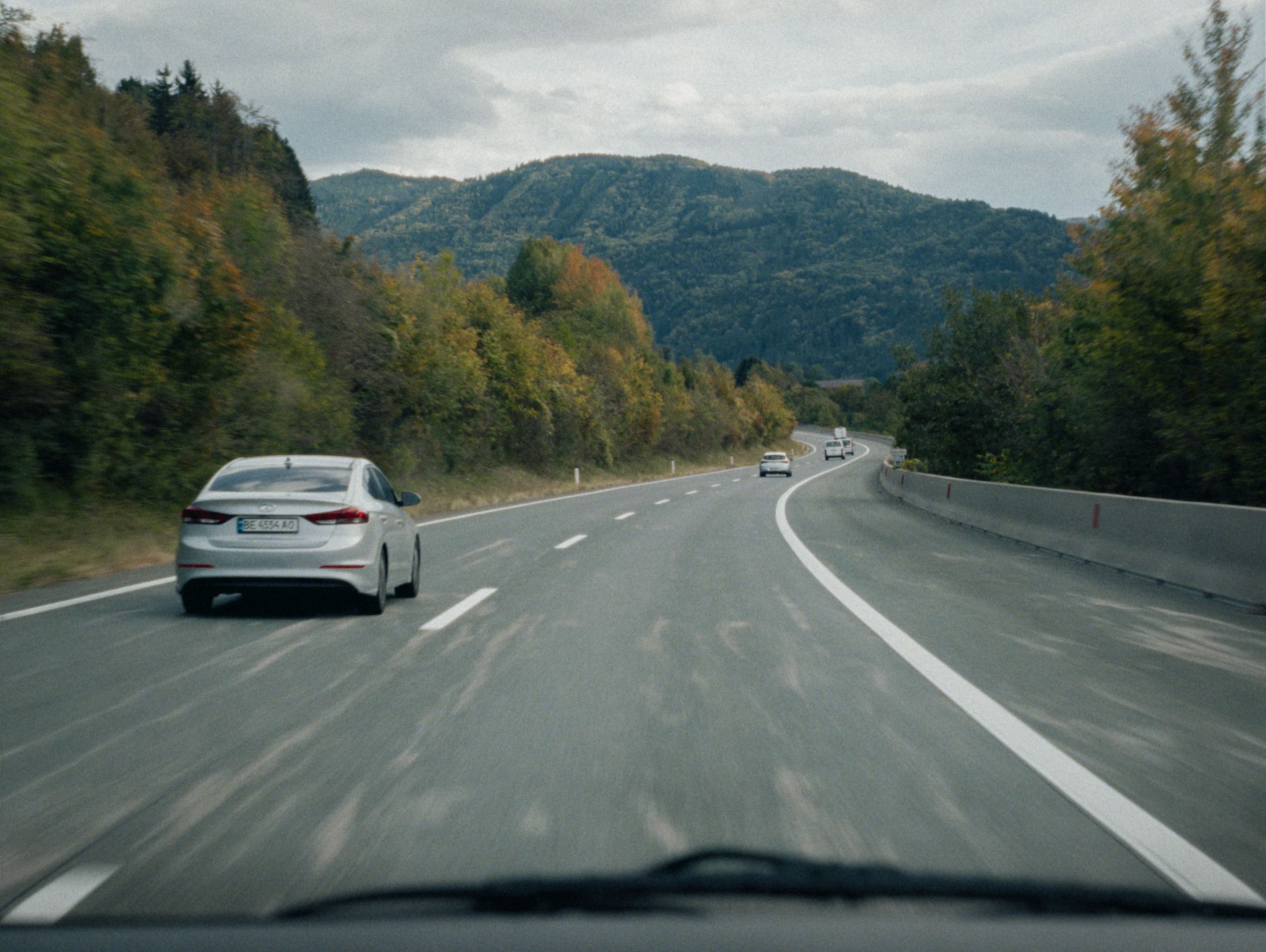
Mountains, forests and verdant plains rush by outside, broken up by junctions, barriers and bridges, the quality of light shifts along with the seasons: wan sunshine, mist, all-pervading grey, flurries of snow in the dark. This road has its own set of stories too, the first motorway to be built in Austria, partially during the Nazi era, as the young academic explains who Bobby also picks up, his research is dedicated to its history. There’s so much back and forth that it feels like it could go on forever, although at some point the direction will change and a song will play on the radio for the very first time.
Sebastian Brameshuber’s fourth feature builds on his natural talent for documentary portraiture and intelligent, humanistic enquiry while also leaning into fiction more than ever before. With all the various, often droll mentions of cinema, it even starts pushing into the realm of the self-reflexive, as if actively seeking to inscribe itself into the long history of the “car film”.
London hinges upon two delicate balancing acts: placing real life testimonies within an invented framework and shooting large parts of what appears like a film made on the fly within a studio. Both of these are performed with such easy seamlessness that it’s often impossible to tell what precisely we are watching, with artifice and authenticity woven together in such a way that each amplifies the effect of the other. And this unobtrusive skill is mirrored at a level of content too, as a statement of quiet force is gradually pieced together about our status quo, which still seems doomed to follow the same route as our history.
In these divided times, what could be more political than simply showing an Austria, a Europe where everyone is equally guided by kindness, inquisitiveness and a desire to understand the other?
James Lattimer
A Stationary Capsule at the Heart of the General Movement
The garage that served as the main setting for Sebastian Brameshuber’s previous film, Movements of a Nearby Mountain (Grand Prix Cinéma du Réel, 2019), could have been seen as a studio, and its owner as an actor staging scenes while repairing cars. While a few drives offered escapes in the form of tracking shots, the transcontinental nature of his used-car business situated the film within the broader horizon of globalized economic exchange. With London, Brameshuber seems at first to reverse this relationship: the car rides become the apparent center of the film. But this shift is deceptive, as they were shot in a studio. The car thus becomes a new cinematic device, driven by the illusion of mobility.
The connection between cinema and road trips is well known. Consider Ten (Kiarostami), The United States of America (Benning and Gordon), or The Plains (Easteal): all experiences in which the car’s interior shapes both the perception of the landscape and the flow of conversation. The atmosphere surrounding Bobby’s Range Rover, however, is entirely characteristic of Brameshuber’s cinema. A carefully crafted camera setup, alternating between shot-reverse shot and views through the windshield, leaves ample space for lengthy dialogues drawn from hours of semi-improvised conversations with non-actors. This gives rise to a calm concentration, a form of attentive contemplation where the exchanges push reality toward a truly extraordinary lucidity. Little by little, the car interior becomes a sanctuary where introspection blends with reflection and hospitality—a defining concept within the temporal space of the highway, at either end of which fascist ideologies loom. In a landscape that authoritatively frames perception and organizes flows, Europe’s contradictions emerge with heightened clarity. The car, a stationary capsule at the heart of the general movement, acts as a discreet yet powerful grain of sand.
Cinéma du Réel
Antoine Thirion
“A unique and deeply moving entry into the canon of experimental road movies.”
“A small masterpiece.”
“One of the year’s most insightful and thoughtful works.”
“Brameshuber has so aptly captured the special feeling of noncommittal closeness between strangers that you immediately want to set off right next to Bobby.”
“Though London is sometimes placid to the point of relaxation (…) its warmth is deceptive. Pop the hood and the anxieties churning away about where we’re headed are white-hot.”
“Simple and radical in both form and concept, this film gradually reveals the eloquence of the characters’ everyday gestures—with all their resistance and doubts—while highlighting the importance of sharing. A film that is in no hurry, and that shows us how generous time can be.”
“Amid the diversity of reality’s forms, we have followed a path—that of a road movie diverted by economic and capitalist forces—along a route inherited from a history that still shapes European flows today. Feverish words are exchanged; a fragile hospitality seeks itself amidst solitude, despite paths that seem predetermined. By holding these lines of tension together, the movement becomes a discreet allegory of a Europe riven by contradictions.”
“For its ability to explore the protagonist’s world with delicacy, complexity and sensitivity, and to shed light on the fundamental issues facing Europe today, creating an intimate and rich cinematic experience that draws the viewer in.”
“A film that is moving both literally and emotionally. Shot with a beguiling precision, this confessional interior becomes a space for fleeting, memorable encounters that together amount to a collective portrait of Europe’s past, present and future.”