
Muezzin
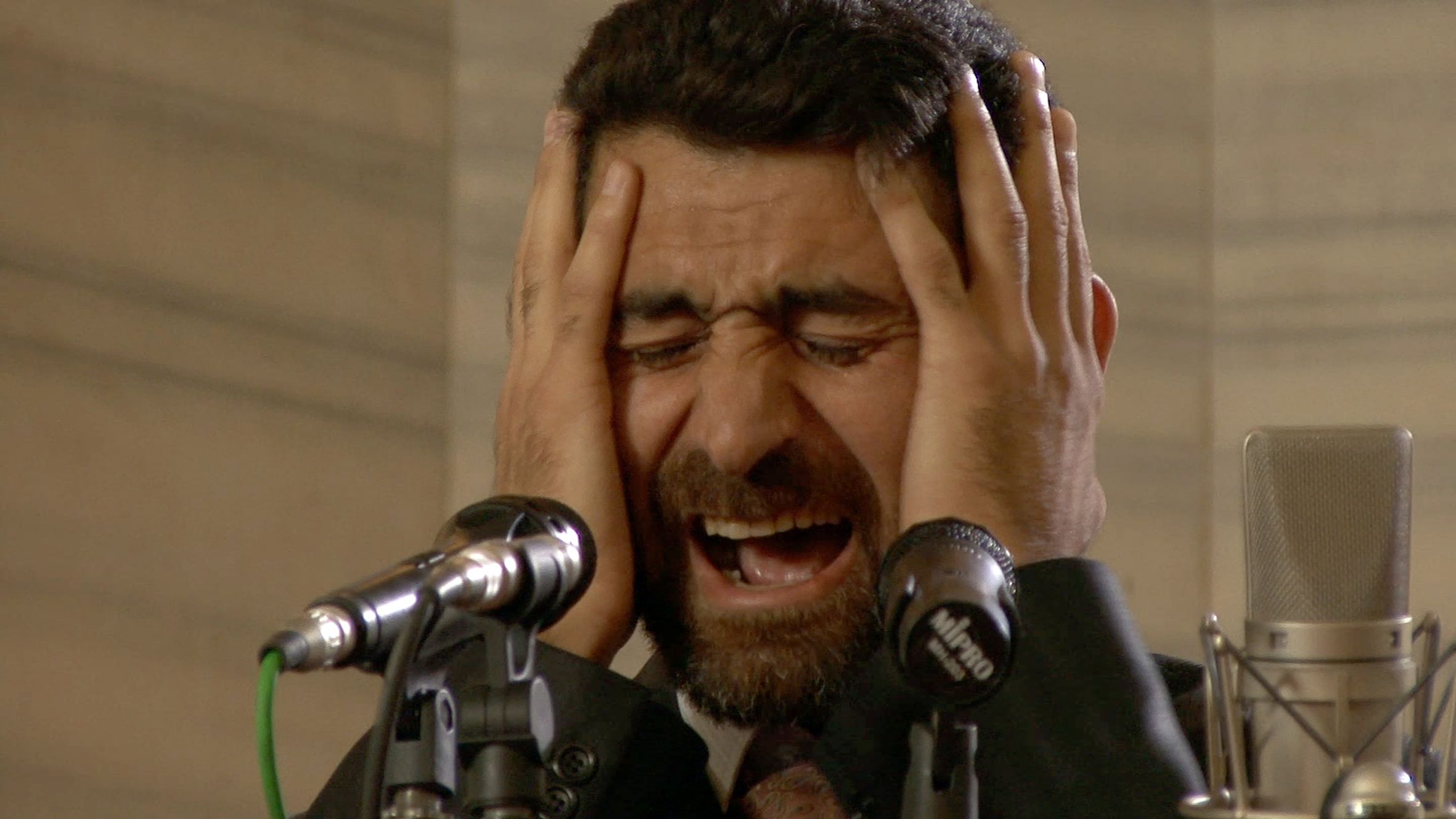
From 2944 mosques Istanbul’s muezzins call the people to prayer five times a day. Once a year, the best among them is determined in a nationwide contest. The film follows the course of the competition along a handful of participants. One repeatedly hears the variations and interpretations of a chant, reminder of the duty of prayer. A tradition becomes visible in which religious and competitive spirit, the search for a voice are worked through performatively year after year as a vanity fair in an exclusively male universe.





From the book Bilder, Falten (Le Studio Edition 1)
“An Austrian documentary film was one of the public favourites at the 29th International Istanbul Film Festival. Brameshuber’s skilful montage, which is affectionate toward his protagonists, sometimes gives us a glimpse of their darker sides. The fact that he does not roll them up and thus avoids clichés, but instead concentrates on the singing contest, enhances the coherence and originality of this beautiful documentary.”
“One wishes for more such documentaries and the wish is immediately fulfilled in one of the late screenings: Muezzin by Sebastian Brameshuber. The film first seduces or abducts to the awakening Istanbul, in beautiful, calm pictures, then climbs up to the minaret with a muezzin and so the story begins.”
Of the Profane and the Sacred
The distant barking of a dog, screeching seagulls, a crying baby—various sounds penetrate the nocturnal silence but are not able to awaken the sleeping metropolis. They accompany a man in a suit who is on his way at daybreak, the rhythmic clacking of his heels on the asphalt of deserted alleys, until he reaches a building. Keys rattle, chains, the beeping of an alarm system is deactivated, hinges squeak. A cumbersome gate is opened; behind it lies a long corridor, a room immersed in darkness. This invisible, indiscernible and in a certain sense abstract place evokes a mysterious atmosphere. Then the first light is switched on and we see the man in the middle of a small room. Following a cut to an almost black screen, a transformation finally takes place by means of illumination: successively, magnificent chandeliers and lamps light up, providing a view of a hall-like room lined with a precious carpet that shines in light and splendor—the interior of a mosque. A panning long shot of the quiet city from above testifies that there are still no visible signs of day, while a huge loudspeaker almost threateningly occupies the foreground of the picture. After eating a spoonful of honey, the man carefully puts on his taqiyah (skullcap) and goes outside, where the silence gradually yields to the chirping of birds and distant chanting. The man walks through a door, climbs up a staircase and steps up to a microphone in a narrow space. He pauses briefly with concentration, then places his hands over his ears and starts to sing with devotion. An emphatic call to prayer rings out as dawn breaks over the roofs of Istanbul. While young men begin their daily work on the streets, the city turns into an echo chamber in which the singing of several thousand muezzins resonates.
Muezzin, Sebastian Brameshuber’s first feature-length documentary, accompanies prayer callers during their preparations for and the holding of the Call to Prayer Competition, which promises the winner high esteem and prestigious work in the major mosques. The filmmaker doesn’t use the dramaturgical arc of the contest in the sense of a suspenseful narrative; rather, it serves him as a vehicle to approach the art of intonation and to gain unknown insights into the everyday life of the Muslim men whose voices call the faithful to prayer five times a day. Brameshuber already condenses the essence of his cinematic approach in the exposition described above. It is the visualization of contrasts that inscribe themselves as constants in Muezzin as well as the interaction of seemingly irreconcilable opposites: for example, in the transition from night to day, from darkness to light, from silence to singing, from urban space to sacred prayer hall.
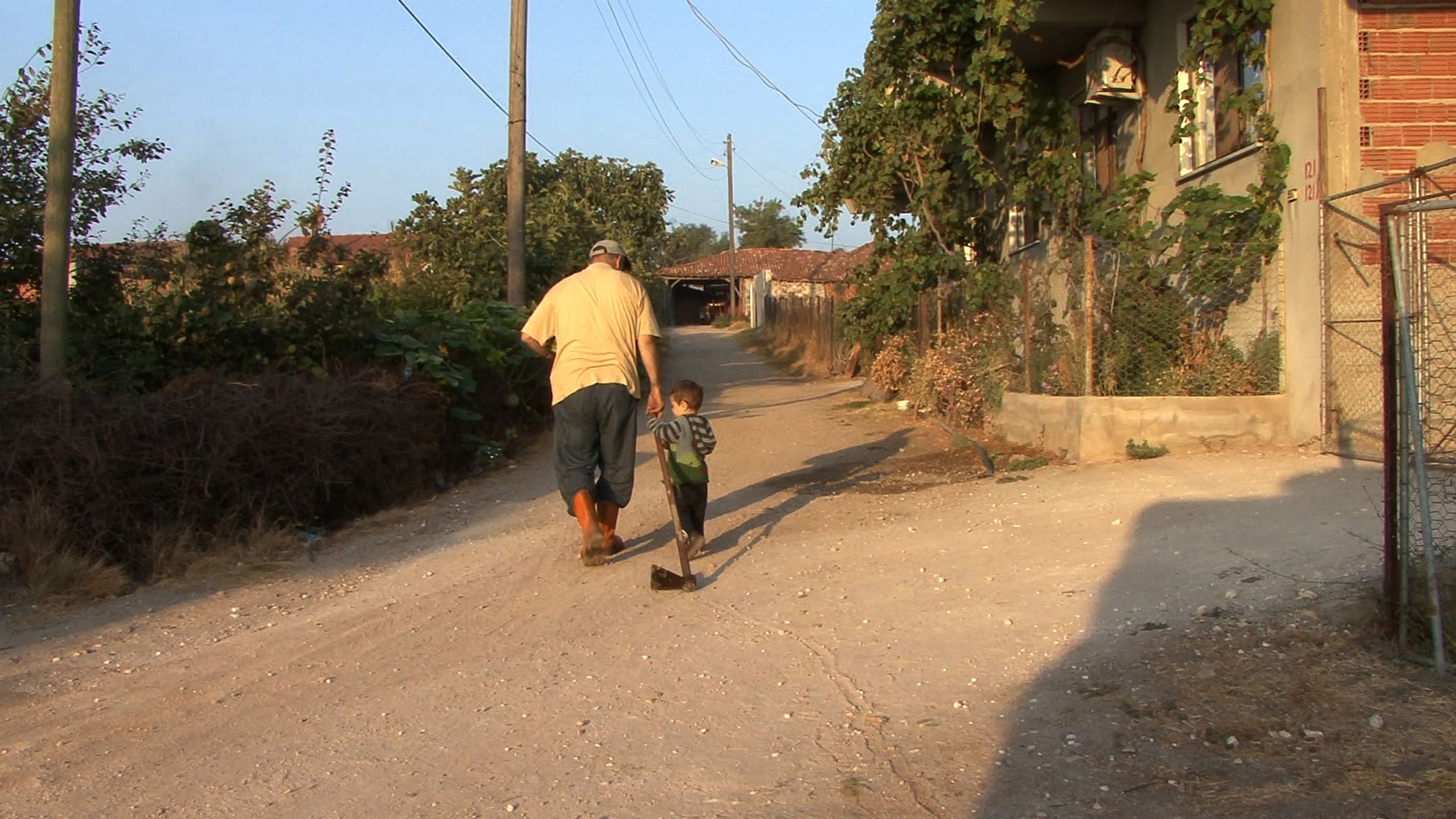
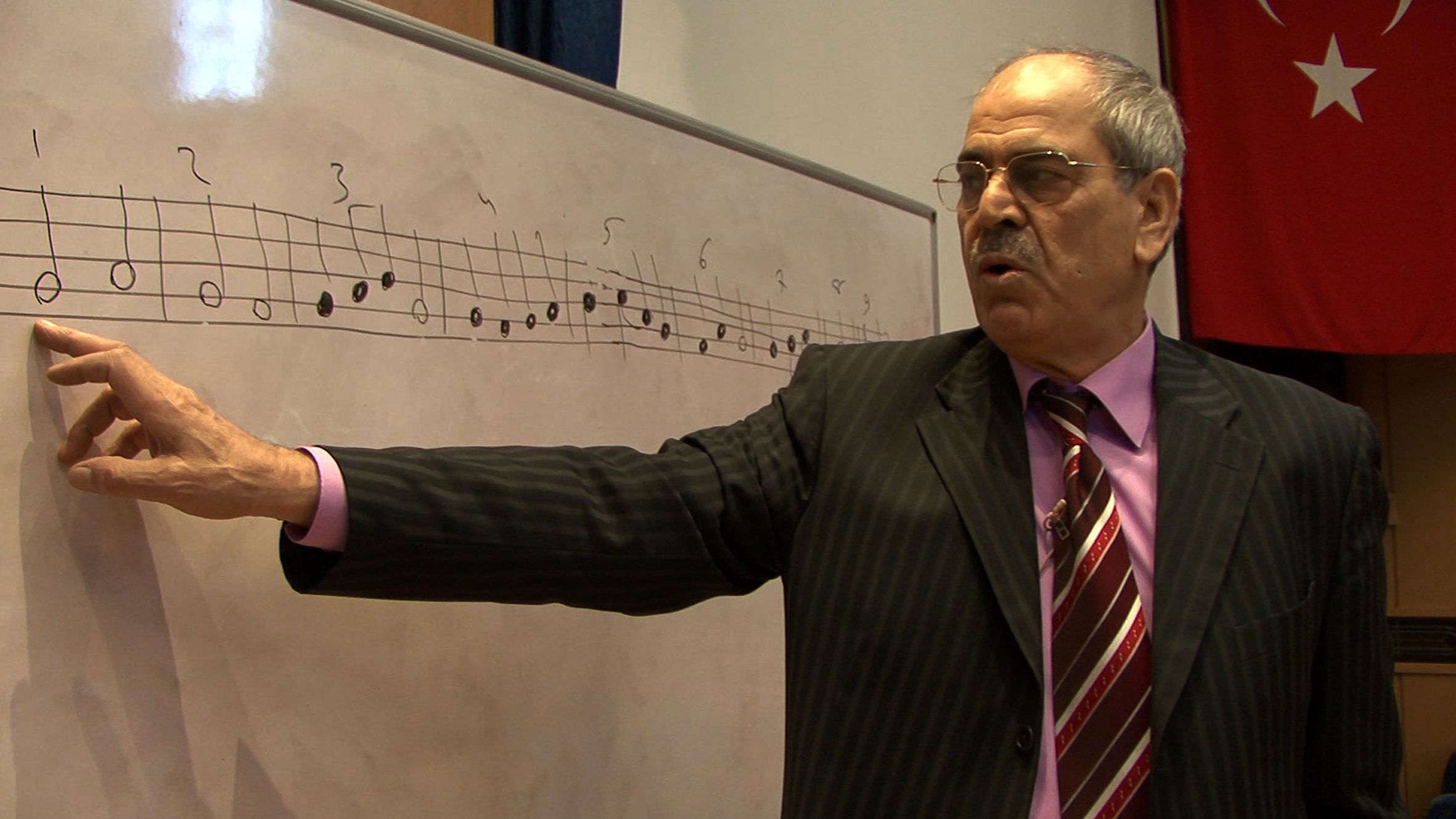
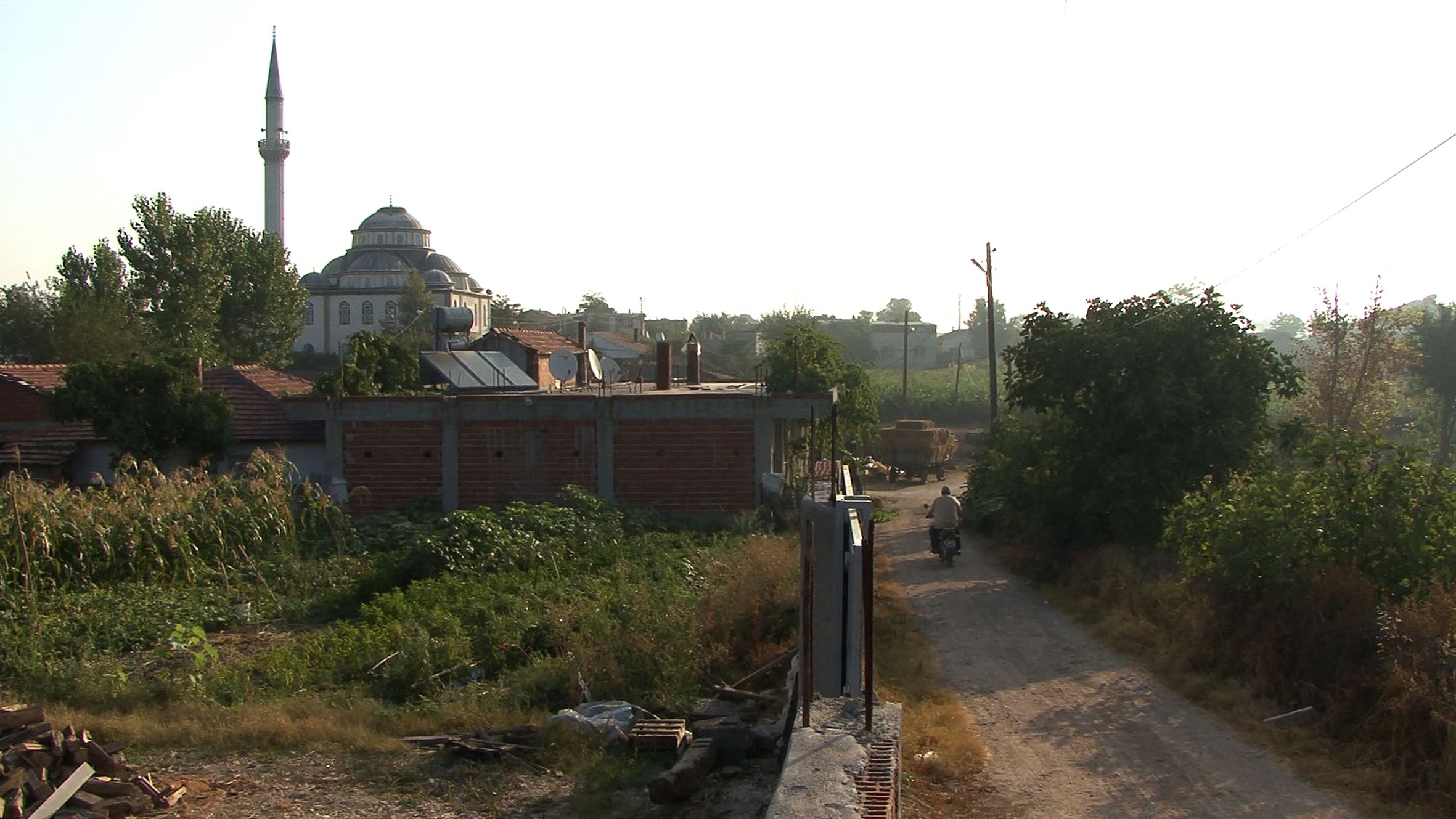
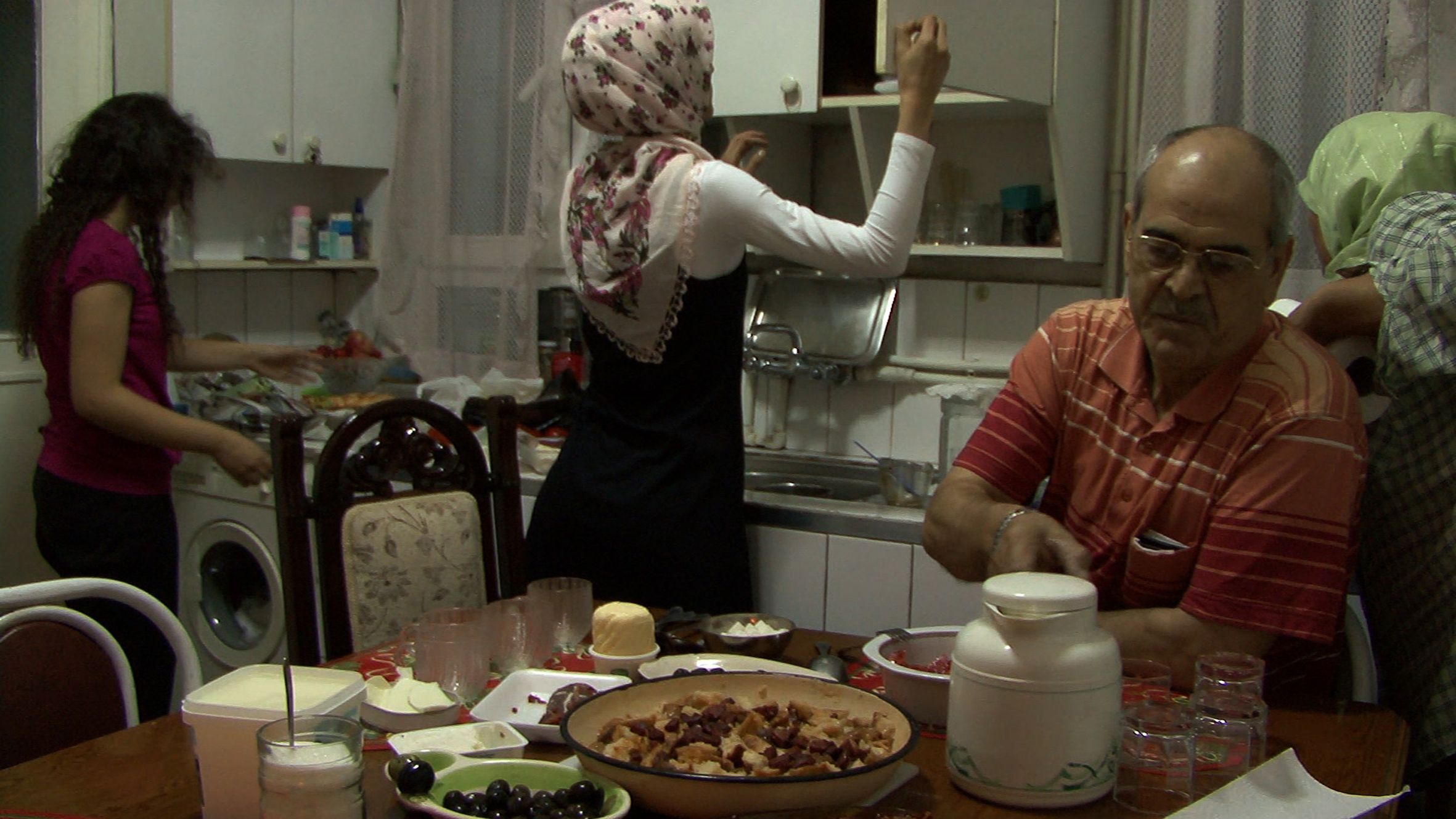
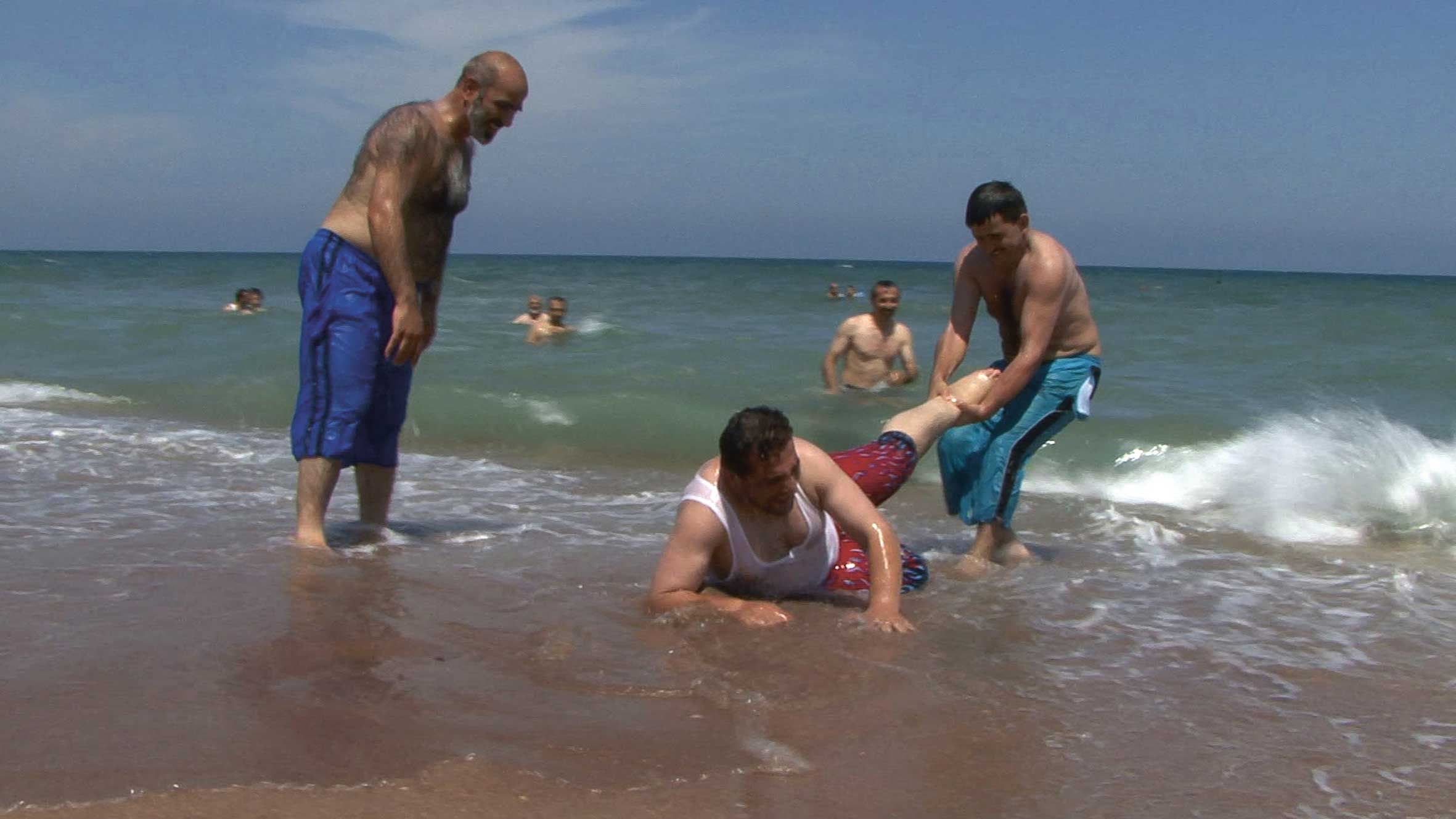
The bustle of the awakening city, through which flows of traffic and tourists gradually weave their way, at first seems to be unaffected by the religious microcosms that nevertheless permeate it and also temporally structure it. Even so, the film reveals interferences between the profane and the sacred during almost every moment. These interferences are not only present between the living environments of Turkish society and the muezzins, but also characterize the everyday lives and personalities of the subjects themselves: Their profession is both a vocation and an occupation. The prayer callers perform their work not as Muslim clerics, but as employees of the state. Their voice is their asset and requires perfection—“the best singing for the best religion”—which the apparently gifted have not simply been born with. They must study this art form and persistently practice their craft between the actual spiritual moments of the Muslim call to prayer, the so-called adhān—in other words, a constant oscillating between spirituality and pragmatism. This becomes evident, not least, in the fact that Brameshuber doesn’t merely focus on the men in their function as muezzins but also shows them in various social roles: as father or teacher figures, as pupils, as patriarchal heads of families, as members of a religious community, and as opponents. In these various contexts, the men’s devotion to Allah gives way to the earthly fight for fame and fortune—the parallel depiction of the muezzins’ competition with a TV show for the best Turkish pop act proves to be quite adequate. Deliberate sublimity turns into arrogant showing-off, or the sacred art form is suddenly declared a sin, for instance, when the daughter of one of the film’s protagonists wants to turn her musical passion into a profession.
In the film, the spiritual aspects and meanings of adhān are communicated only sparsely through verbal descriptions. It is the prayer calls themselves, the performances before the jury of the competition and the intoned appeals from the minaret through which this knowledge is conveyed—as a feeling, as an experience that becomes possible only through the art form itself. In Muezzin, Brameshuber adopts the characteristic aspect of art to evoke experience. He dispenses with explanatory commentaries to allow the protagonists and, above all, the language of the film to express themselves. Alternating between truth and artistic poetry, this poetic documentary film assembles various, sometimes contradictory, facets of its main characters’ lives and personalities to form a mosaic-like and complex picture, not only of the muezzins portrayed, but of an important (sub)culture of Muslim society. A picture that doesn’t so much confirm clichés as provoke a revision of simple attributions.
From Bilder, Falten (Le Studio Edition 1)
Michelle Koch
“An Austrian documentary film was one of the public favourites at the 29th International Istanbul Film Festival. Brameshuber’s skilful montage, which is affectionate toward his protagonists, sometimes gives us a glimpse of their darker sides. The fact that he does not roll them up and thus avoids clichés, but instead concentrates on the singing contest, enhances the coherence and originality of this beautiful documentary.”
“One wishes for more such documentaries and the wish is immediately fulfilled in one of the late screenings: Muezzin by Sebastian Brameshuber. The film first seduces or abducts to the awakening Istanbul, in beautiful, calm pictures, then climbs up to the minaret with a muezzin and so the story begins.”