
Of Stains, Scrap and Tires
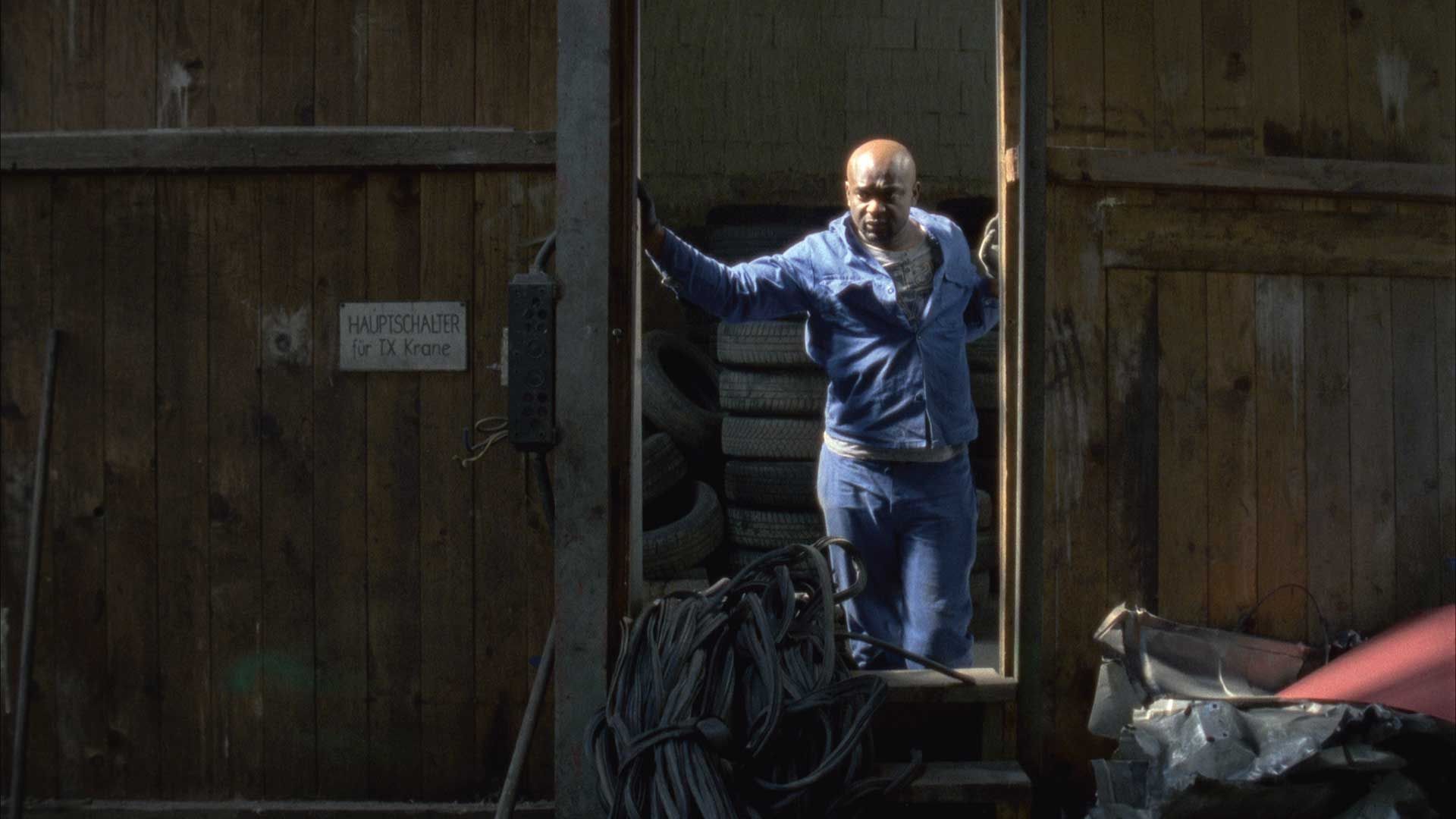
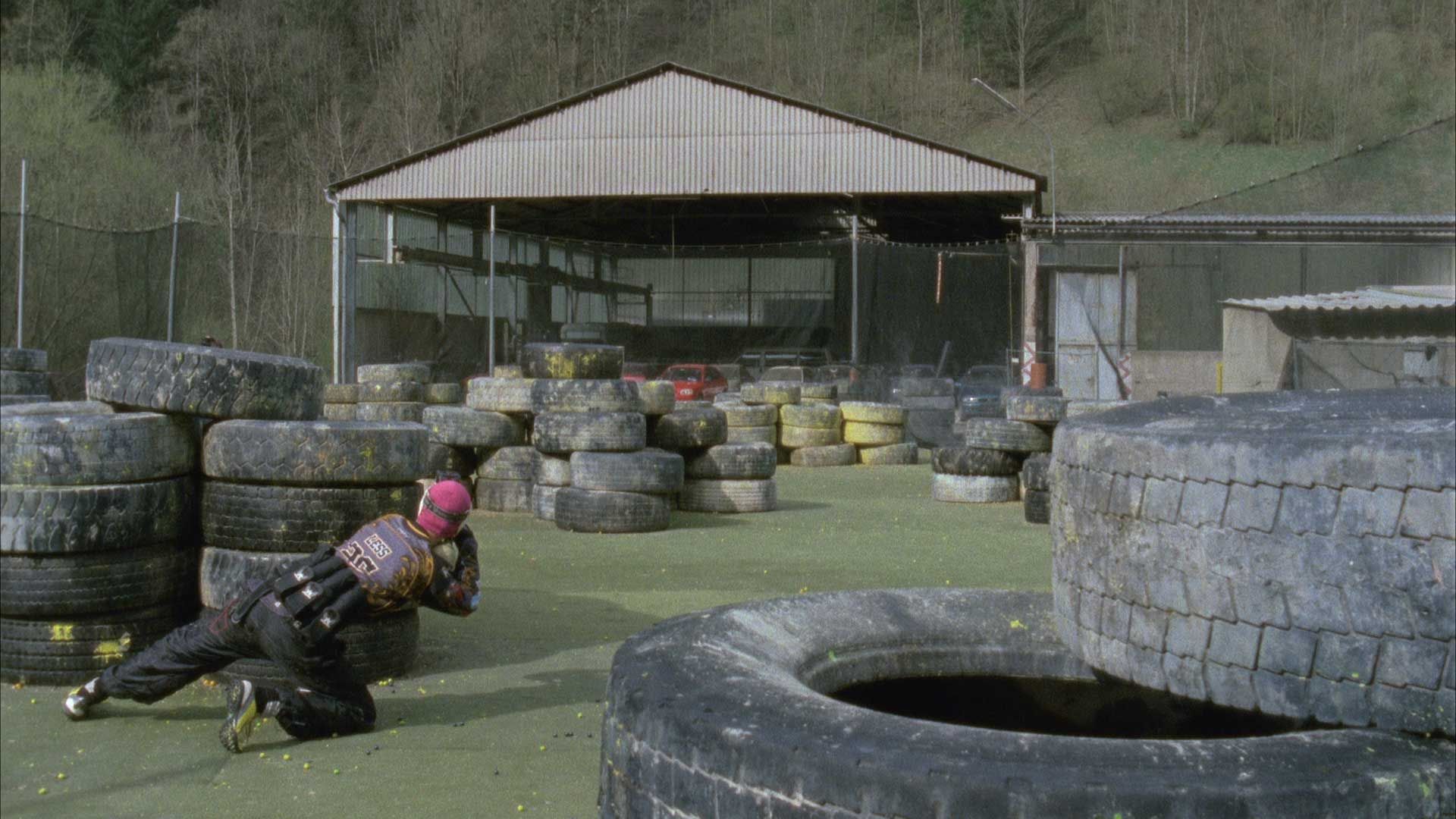
Engines, axles, cylinders – the components of bliss. Whatever cannot be resold in Europe is shipped to Africa by the scrap-masters of Erzberg. Happiness is found in easily made money (seldom), the beauty of a man-made machine (rare), and in the real and imagined freedom on wheels. The audiovisual poetry of the garage, scrap parts and paintball field are accompanied by another master of cars, Bobby Sommer, reciting a poem by Bertolt Brecht about the singing cars of Steyr. While promising cars of silent ease, the advertising text does not withhold their connection to the weapon industry.
Country, year
Austria, France, 2014
Runtime
19 min
Writer, director
Sebastian Brameshuber
Cinematography
Klemens Hufnagl
Editor
Sebastian Brameshuber
Sound
Matthias Kassmannhuber
Off voice
Bobby Sommer
Production manager
Paolo Calamita
Amélie Dubois
Production
Le Fresnoy
Sebastian Brameshuber
KGP Gabriele Kranzelbinder Production
Film format
Super 16mm 1:1.66
Screening format
DCP 2k, 1:1.85, Dolby 5.1
Supported by
Le Fresnoy
Cine Art Steiermark
Kultur Land OÖ
Kultur NÖ
Wien Kultur MA7
Österreichisches Kulturforum Paris
Distribution
sixpack film
World premiere
Viennale 2014
Festivals (selection)
Viennale 2014
Berlinale Shorts 2015
DokuFest Prizren 2015
Courtisane, Festival for Film, Video and Art, Gent 2015
Busan International Short Film Festival 2016
Rencontres Internationales Paris/Berlin/Madrid 2016
Go Short Film Festival Nijmegen 2016
Dokumentarfilmwoche Hamburg 2016
Awards
Arbeitswelten-Förderpreis, Arbeiterkammer Salzburg 2015
Nomination, Silver Eye Award, East Silver Market (Jihlava) 2015
Best Austrian Short Film, VIS Vienna Shorts 2015



1/3
Excerpt from the interview “A Distrust of Myself, of the Other Within Myself” — P. 5
by Alejandro Bachmann
From Bilder, Falten (Le Studio, Edition 1)
Work, Rust and Paint
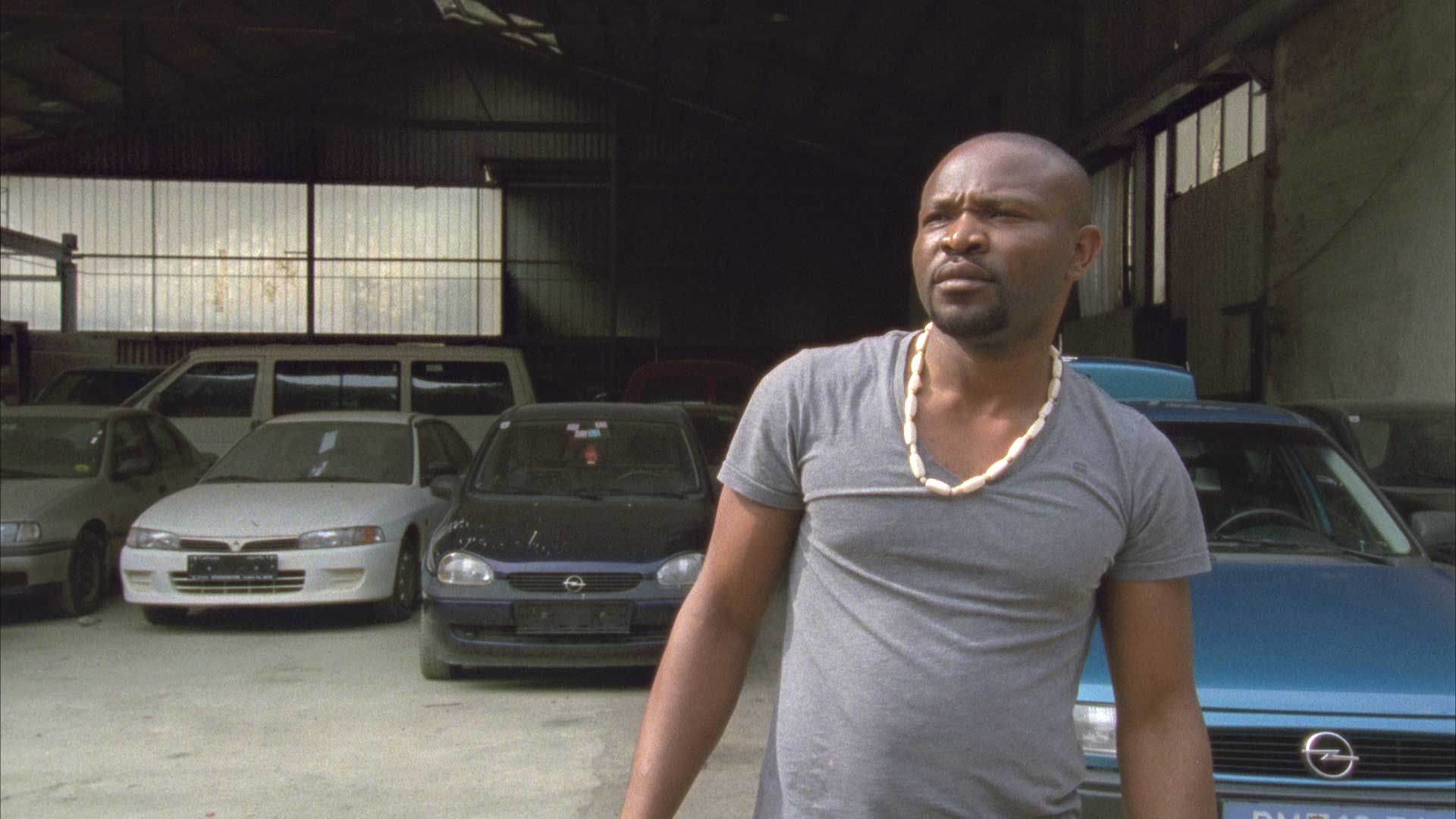
The film begins with the blasting of a rock face on the Erzberg mountain—and with a poem by Brecht from the interwar period, which reflects on the close connection between the Styrian automobile industry and the arms industry. Two long pans through a gray landscape follow, while mild men’s voices from the off attempt to conduct business on the phone. Of Stains, Scrap & Tires is a calm, documentary miniature that chooses the auto export business of three young Nigerians in the Erzberg region as a point of association and departure for formulating something more fundamental about the first and third worlds, movement and standstill, business, space, and freedom.
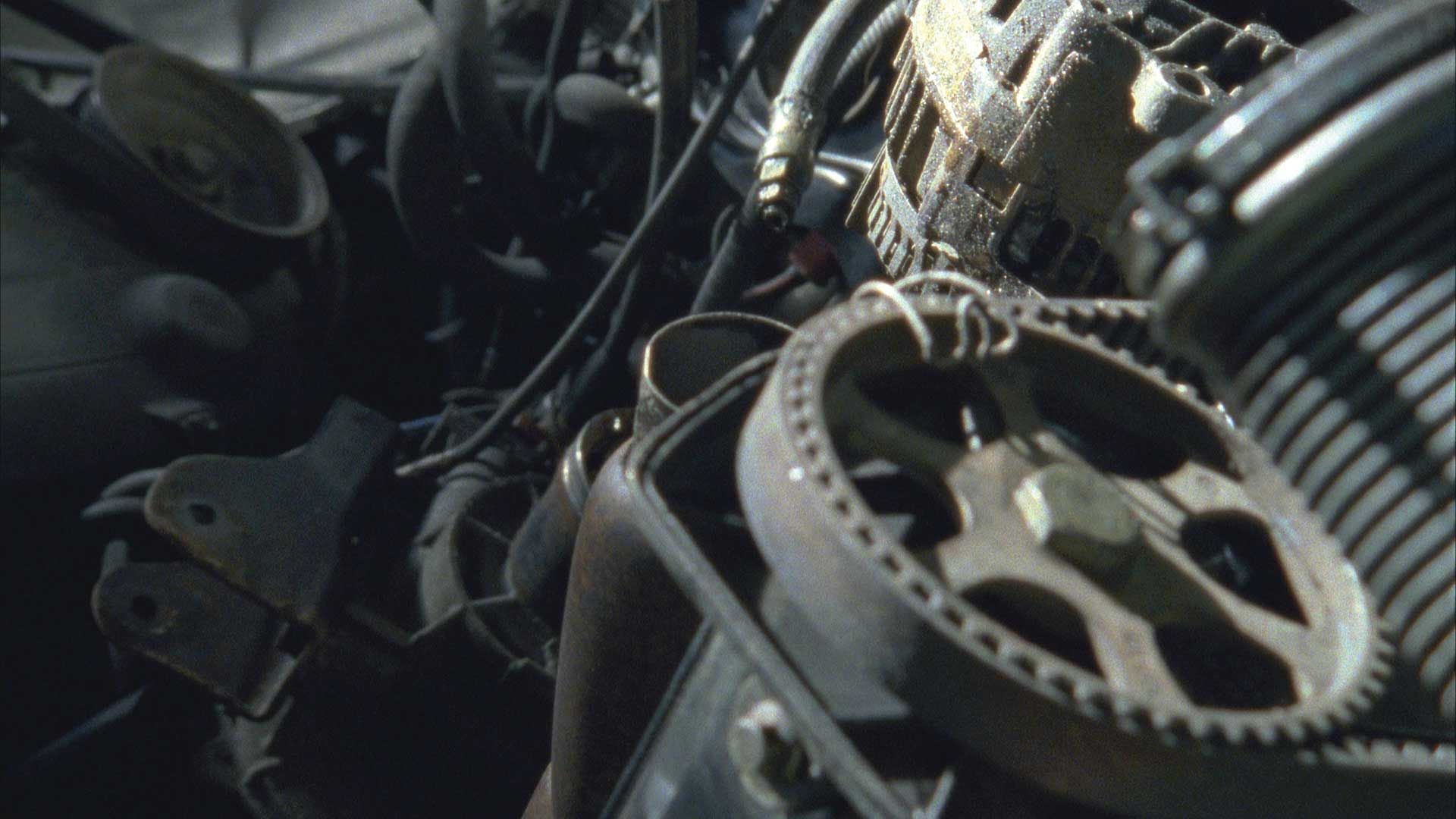
Director Sebastian Brameshuber demonstrates his appreciation of sculptural still life and fine moving-image compositions: car tires bounce through the garage as though possessing a life of their own, and the men perform physical labor on the car wrecks that they sell to Africa in whole or fileted pieces. Brameshuber hints at economic connections and processes, but is equally interested in the painterly traces of rust and paint, the inner lives of the motors and the view of the containers piled on top of one another in which the cars will be shipped.
The acoustic has an equal position to the visual in this staging: in the off, a small radio play takes shape from the sounds of tools, buzzing motors, and the rattling paintball gun. The precision of form keeps the narrative openness in check, the pointed montage delivers impressions, fragments of a very special average workday.; allows no overview, but instead, coolly protocols the interplay of bodies and machines, sticking close to the details of the garage, the fork lifts, paint guns, and heaps of rubber and rims.
From Bilder, Falten (Le Studio, Edition 1)
Stefan Grissemann